The rules of professional visibility have fundamentally changed. Your LinkedIn profile is competing for attention in your network’s feed and to be discovered, cited, and recommended by AI systems. And that’s rapidly becoming the primary way professionals find experts and solutions.
The data reveals the magnitude of this shift. According to Gartner, traditional search engine volume is expected to drop by 25% by 2026 as users increasingly turn to AI assistants for answers.
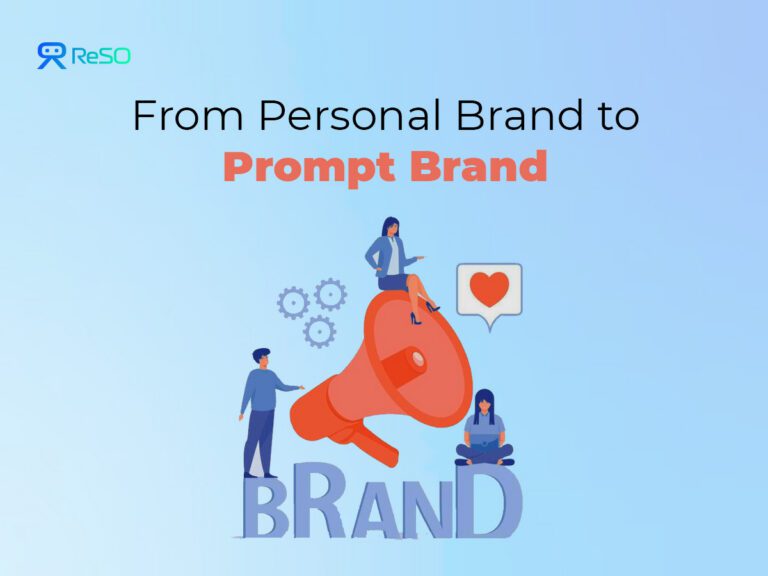
This creates a new imperative: building a “Prompt Brand,” a professional presence optimized for both human discovery & for AI citation. When someone asks ChatGPT, “Who are the leading voices on content strategy?” or Perplexity “Who should I hire for B2B marketing?” will your name appear?
The answer depends on understanding the fundamental difference between social reach and AI recall.
Key Findings:
- Gartner predicts a 25% drop in traditional search by 2026 as AI assistants become primary discovery tools.
- Social reach (LinkedIn engagement) ≠ AI recall. AI prioritizes topical consistency, frameworks, and cross-platform authority over viral posts.
- Backlinko is cited repeatedly by ChatGPT due to data-rich guides, consistent publishing, community presence, and external citations.
- Semrush: Reddit tops LLM citations (40%), making community engagement essential alongside LinkedIn.
- AI referrals convert 3-5x better than Google traffic with longer sessions, justifying “Prompt Brand” investment.
Social Reach vs AI Recall
Traditional personal branding focused on social reach:
- The size of your network
- Engagement on your posts
- Visibility within your immediate professional community.
Prompt branding focuses on AI recall; whether AI systems “remember” and cite you when users query topics in your domain.
| Paradigm | Core Mechanism | Key Metrics | Success Goal | Limitations in AI |
| Social Reach | Network effects: connections engage, the algorithm amplifies to their networks | Follower count, impressions, engagement rates, profile views | Maximize visibility within the LinkedIn ecosystem | Insufficient as AI aggregates from the web, not just LinkedIn |
| AI Recall | AI extracts expertise signals, content depth, and authority markers across platforms | Topical consistency, frameworks, citations, cross-platform validation | Become the “sticky” default voice in AI knowledge bases | Viral posts may lack citable structure; focus on query-time citation |
Founders and Brands Being Cited by LLMs
Case Study: Marketing Thought Leader
When analyzing what made Backlinko consistently appear in ChatGPT’s responses to SEO-related queries despite not ranking #1 for many competitive terms, the pattern became clear:
- Comprehensive, data-rich guides with original research
- Consistent publishing on specific topics over the years
- Strategic presence on community platforms where marketers ask questions,
- External citations from other authorities in the space.
When someone asks ChatGPT, “What are the best resources to learn SEO in 2025?” Backlinko gets mentioned twice because AI systems recognize it as an authoritative, frequently-cited source based on its comprehensive content footprint.
The Common Patterns
Professionals successfully building Prompt Brands share observable characteristics:
- They maintain topical consistency, posting regularly on specific domains rather than scattered topics.
- They create structured, extractable content with frameworks, data points, and clear expertise signals.
- They build a cross-platform presence that reinforces LinkedIn expertise through articles, community engagement, and media mentions.
- They generate substantive engagement through meaningful discussions, not just passive likes.
The lesson is clear: AI citation isn’t accidental. It’s the result of systematic strategies that make your expertise visible, structured, and citable across the contexts AI systems access when building responses.
Tactical Framework for “Prompt Brand” Building
1. Structure Content for AI Extractability
AI systems favor content they can easily parse and extract insights from. Transform your LinkedIn posts using clear headline framing (“3 Frameworks for X,” “Why Y Approach Fails”), numbered frameworks and step-by-step processes, explicit data points with sources (“According to Gartner,” “Our analysis of 500 campaigns”), and contextual markers about who this is for and what problems it addresses.
Instead of: “I’ve been thinking about content strategy lately. Here are some insights from my work…” Write:
- 3 B2B Content Strategy Frameworks That Drove 40% Pipeline Growth in 2025:
- Topic Clustering (increased organic traffic 67%)
- Sales-Marketing Content Alignment (shortened sales cycle 23 days)
- Executive Thought Leadership Program (generated $2M in attributed pipeline).
The second version provides AI systems with extractable frameworks, specific metrics, and clear context about the application and results.
2. Diversify Your Presence Strategically
According to research on LLM citation patterns, AI systems don’t pull exclusively from one platform; they aggregate from multiple sources. According to Semrush, LLMs cite Reddit more than any other source, making community engagement critical for AI visibility.
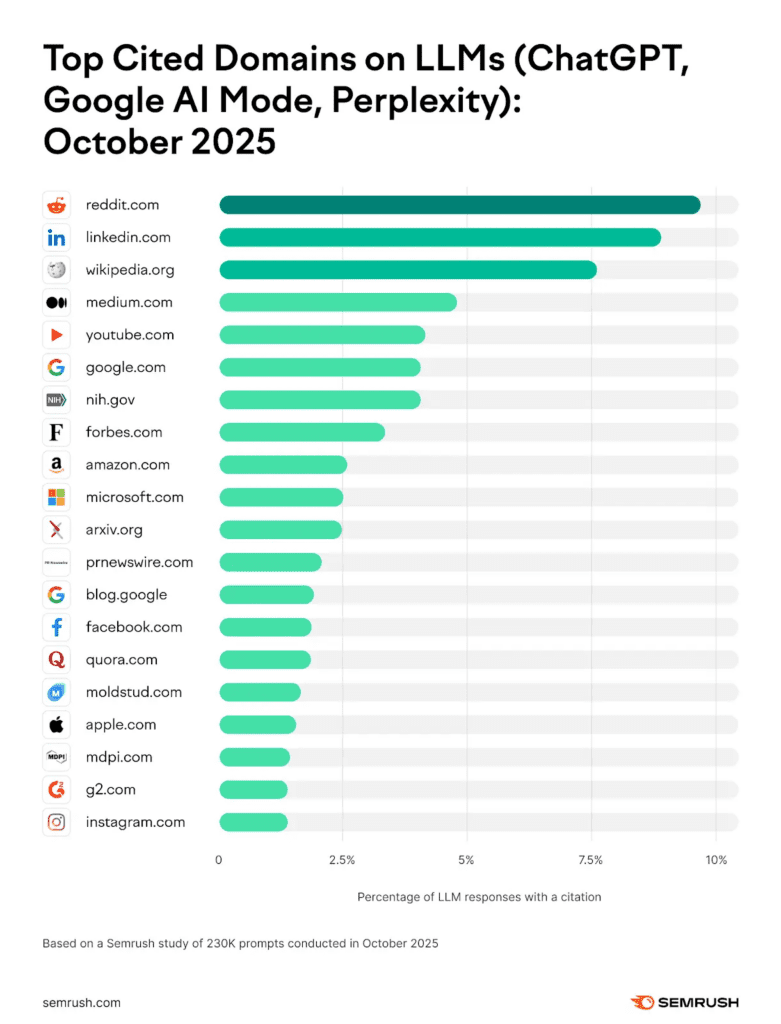
Build presence on high-authority platforms, including LinkedIn (your primary professional hub), Reddit (r/yourIndustry subreddits with genuine, helpful contributions), Medium or personal blog (long-form thought leadership), industry forums and communities (where your audience asks questions), and review platforms like G2 or Capterra if relevant (with detailed, use-case-rich reviews).
The key is consistency across platforms: AI systems build confidence in your expertise when they encounter you repeatedly across multiple contexts, all demonstrating depth in your domain.
3. Amplify Authority Signals
AI systems prioritize credibility markers like original research, explicit source citations, case studies, nuanced insights, and external validation (media mentions, speaking gigs). Wikipedia pages and high-authority media coverage provide especially strong signals that significantly increase AI citation likelihood.
4. Build Entity Coherence
AI systems create “entity representations,” comprehensive profiles of who you are and what you’re expert in. Strengthen your entity coherence by using consistent professional naming across all platforms, maintaining clear, consistent specialization language (don’t describe yourself differently on LinkedIn versus your website).
Link all your platforms together (LinkedIn → website → Medium → speaking page), and use schema markup on your website to explicitly define your professional entity.
This coherence helps AI systems confidently connect mentions of you across different sources, building a comprehensive understanding of your expertise that makes citations more likely.
How to Measure Success: AI Share-of-Voice + LinkedIn Authority
AI Share-of-Voice Metrics
Track how often your brand appears in AI responses compared to competitors for relevant queries. Manually prompt ChatGPT, Perplexity, Gemini, and Claude monthly with questions like “Who are experts in [your domain]?” or “What are best practices for [your specialty]?”
Document which brands get mentioned and in what context.
LinkedIn Authority Indicators
Within LinkedIn itself, track metrics that correlate with AI citation worthiness including consistent publishing frequency (3-4 quality posts weekly), engagement quality (substantive comments, not just likes), profile completeness with clear expertise signals, and content performance patterns (which post types drive deeper discussions).
AI Referral Traffic
Use Google Analytics to monitor traffic specifically from AI platforms. Set up tracking for referrals from perplexity.ai, chat.openai.com, gemini.google.com, and claude.ai.
According to Adobe, visitors from AI referrals typically show 38% longer session duration.
The Conversion Quality Metric
Perhaps most important: track conversion rates and deal velocity for prospects arriving from AI referrals versus other sources. 73% of AI visitors convert within the first session vs 23% from Google; they’ve already been endorsed by a system they trust. This business impact metric justifies investment in Prompt Brand building, even if vanity metrics like follower count don’t immediately spike.
The transformation from personal brand to Prompt Brand is the natural evolution of professional visibility in an AI-first world. The professionals who build citation-worthy presence now will capture disproportionate advantages as AI becomes the primary discovery channel.
The framework is clear:
- Structure your LinkedIn content for AI extractability with frameworks, data, and clear expertise signals.
- Diversify presence across platforms, AI systems actively crawl, especially Reddit and industry communities.
- Amplify authority through original research, media coverage, and external validation.
- Build entity coherence so AI systems confidently connect your expertise across multiple sources.
Success requires a shifting mindset from “Did this post get engagement?” to “When someone asks AI about my domain, am I cited?” The metrics that matter are AI share-of-voice, citation frequency, referral traffic from AI platforms, and most importantly, the conversion quality of AI-referred prospects.
The question is whether you’ll build a Prompt Brand designed for this reality or keep optimizing for yesterday’s game while competitors capture the citations and clients that AI systems recommend.And if this sounds like something you want to do, book a call with us at ReSo.