LinkedIn content is no longer just competing for visibility in feeds. It’s competing to be discovered and cited by AI systems like ChatGPT, Perplexity, and Google AI Overviews, which are primary tools professionals use to find experts.
AI-generated LinkedIn content surged 189% after ChatGPT’s launch, with 54% of long-form posts now AI-generated. LinkedIn’s 1.2 billion members saw 107% longer posts and 20% in video uploads in 2025. Yet, AI systems are the new gatekeepers deciding which posts get surfaced in response to professional queries.
Key Takeaways:
- LinkedIn posts now compete to be discovered and cited by AI systems, not just for feed visibility.
- Early engagement in the first 60-90 minutes (“golden hour”) significantly boosts post reach.
- Carousels outperform most formats, but their relative advantage has narrowed to about 3.7x compared to text posts.
- LinkedIn penalizes AI-generated posts, reducing reach by 30% and engagement by 55%, favoring authentic content.
- Posts with rich semantic density, clear structure, contextual anchors, and authoritative language are favored by AI.
- Educational frameworks, data-driven insights, personal vulnerability with professional value, and problem-solution posts get the highest AI pickup.
- Regular, consistent posting (3-4 times per week) signals expertise and improves AI citation chances over time.
How AI Models Interpret Social Signals and Engagement
Engagement as Authority:
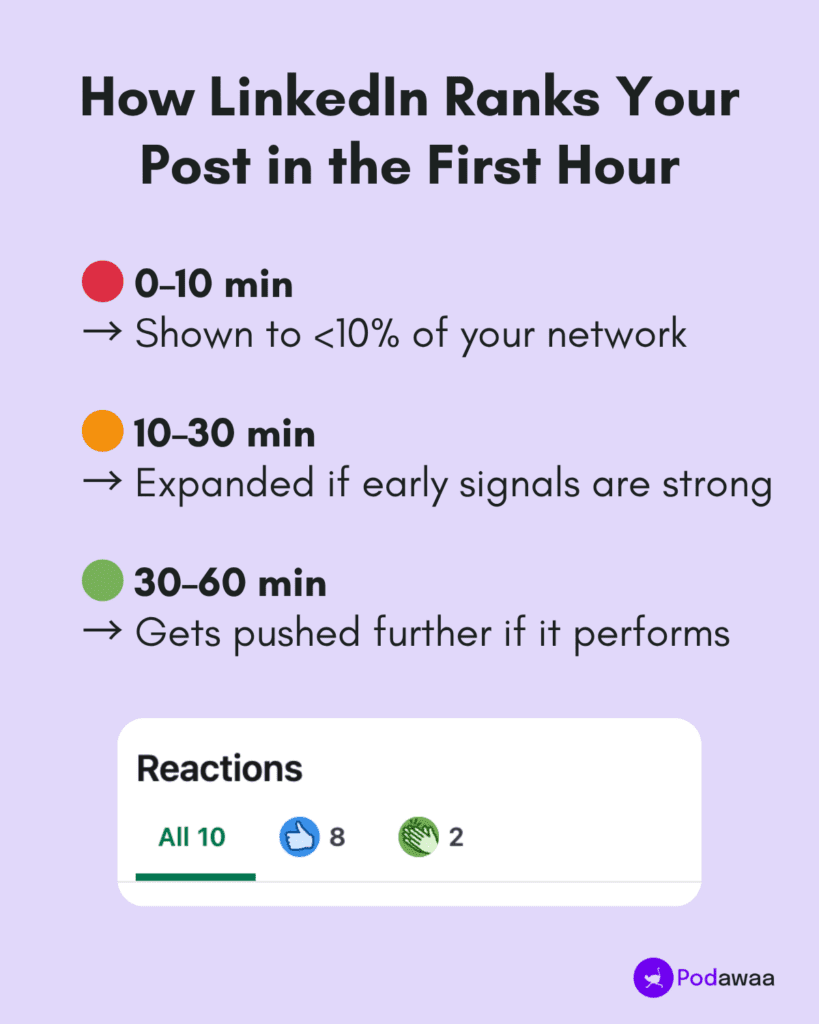
AI models use social signals like likes, comments, and shares to gauge content value. Early engagement in the first 60-90 minutes (“golden hour”) helps jump a post’s reach. Quality discussions matter more than passive likes.
Dwell Time Over Vanity Metrics:
LinkedIn prioritizes posts that hold reader attention longer, encouraging depth over brevity. AI favors content demonstrating expertise through thorough coverage, not quick takes.
Format Matters
- Carousels still outperform most formats by 11.2x, though their relative reach dropped to 3.7x compared to text posts as per LinkedIn influencer Chris Donnelly.
- Long-form posts with external links perform well, suggesting AI values content tied to broader knowledge networks.
- Educational frameworks and data visualizations simplify AI extraction and increase citation likelihood.
The AI-Content Paradox
LinkedIn penalizes AI-generated posts (30% less reach, 55% less engagement) while AI-generated posts flood the platform. AI models distinguish valuable human engagement from algorithmically generated noise, so only authentic engagement signals survive AI pickup.
Keywords vs. Context: Language Shapes AI Understanding
| CONCEPT | DESCRIPTION | EXAMPLE |
| Semantic Density | AI understands rich, interconnected concepts beyond simple keywords. Precise domain language signals expertise. | “B2B demand generation using ABM and predictive analytics” > vague “marketing”; improves AI understanding. |
| Structured Language | Clear main points, numbered lists, definitions, and logical cause-and-effect relationships aid AI parsing and citation. | Posts like “5 mistakes in content strategy: 1) …, 2) …” are easier for AI to extract and cite. |
| Contextual Anchors | Industry, role, problem, and time-specific phrases help AI match content to relevant user queries, boosting discovery. | Phrases like “in B2B SaaS,” “for remote teams in 2025,” help AI link content to precise search intents. |
| Authority Language | Using data citations, acknowledging nuances, and demonstrating practical application signals genuine expertise to AI. | E.g., “According to Gartner research,” “while X is common advice, context Y changes that,” builds trust. |
Patterns of Top-Performing Posts (2025)
Frameworks Dominate:
Posts with structured approaches like “5-step processes” get higher engagement and AI pickup.
Data-Driven Content Wins:
- Create posts that share original stats and analysis.
- This helps draw higher engagement and provide factual AI reference points.
Personal Vulnerability + Professional Value:
Stories beginning with personal challenge and transitioning to actionable insight generate high dwell time and AI resonance.
Problem-Solution Structure:
- AI discovery tends to favor problem-solving posts.
- Hence, creating posts outlining a problem, explaining common failures, and proposing clear solutions performs well.
Consistency Matters:
Only 7.1% post regularly. Those doing 3-4 posts per week consistently see proportionate visibility, signaling authority to AI over time.
Framework: Creating “Promptable Content” for AI Visibility
What is Promptable Content?
Content designed to answer real questions users ask AI, aligning with queries your ideal client poses. Shift from “what I want to say” to “what AI users ask.”
- Build a Prompt Library: Identify common audience questions via tools, LinkedIn comments, and customer insights. Use these prompts to create targeted posts.
- Structure for Extractability: Use clear headlines, numbered lists, definitions, and formatted stats for AI to easily pull information.
- Cross-Post Authority Signals: Link LinkedIn posts to deeper website content, case studies, media appearances, and research to build a comprehensive authority profile AI recognizes.
Optimize for Both: Humans and AI
Balancing authenticity with structured information allows content to rank well in LinkedIn’s algorithm and be cited by AI. Personal voice and engagement attract humans; clear frameworks and data attract AI.
Measure AI Visibility
Track AI citations by querying ChatGPT, Perplexity, and analyzing referral traffic. Although tools are emerging, regular monitoring helps refine a promptable content strategy.
The End Game?
LinkedIn posts now act as training data and citation sources for AI-driven professional discovery. Success demands posts that combine educational frameworks, data, engaging storytelling, and consistent frequency.
AI rewards depth, structure, and authenticity. Those mastering promptable content become AI-cited experts, gaining disproportionate visibility regardless of follower count or virality.
Only 7.1% post regular, consistent, well-structured content vaults you into the top tier. With AI content saturating LinkedIn but penalized for lack of engagement, authentic expertise with a promptable structure is your competitive edge.
Your LinkedIn posts compete to be the AI’s answer when experts are sought. Are you posting for today’s AI-driven discovery, or clinging to yesterday’s social strategy?
If you want to learn more about LinkedIn visibility and showing up on AI search results with your LinkedIn efforts and content, check out more of our blogs here.
And if you need ReSo to help you directly with that, book a call with us here.
FAQs
Why does AI visibility matter for LinkedIn posts?
AI systems like ChatGPT and Google AI Overviews increasingly serve as professional discovery tools, citing LinkedIn content as expert sources. Optimizing for AI visibility boosts your reach beyond the LinkedIn feed.
What types of engagement influence AI pickup?
Early engagement within the first 60-90 minutes is critical. AI favors posts with meaningful likes, shares, and especially substantive comments that signal real value.
Which post formats perform best with AI?
Carousels continue to perform strongly, with long-form posts and those including external links also favored as they provide richer context for AI synthesis.
Does AI prefer human or AI-generated content?
LinkedIn penalizes AI-generated posts, reducing their reach and engagement, while rewarding authentic, human-generated content with genuine social signals.
How does language affect AI understanding?
AI favors precise domain language with semantic richness, clear structure, contextual anchors (like industry or problem mentions), and authoritative citations.
What content patterns drive AI citation?
Posts with educational frameworks, original data, problem-solution structures, and personal yet professional insights engage AI and human audiences alike.
How often should I post to rank well with AI?
Consistent posting: 3-4 times weekly helps build authority signals that increase AI citations over time.