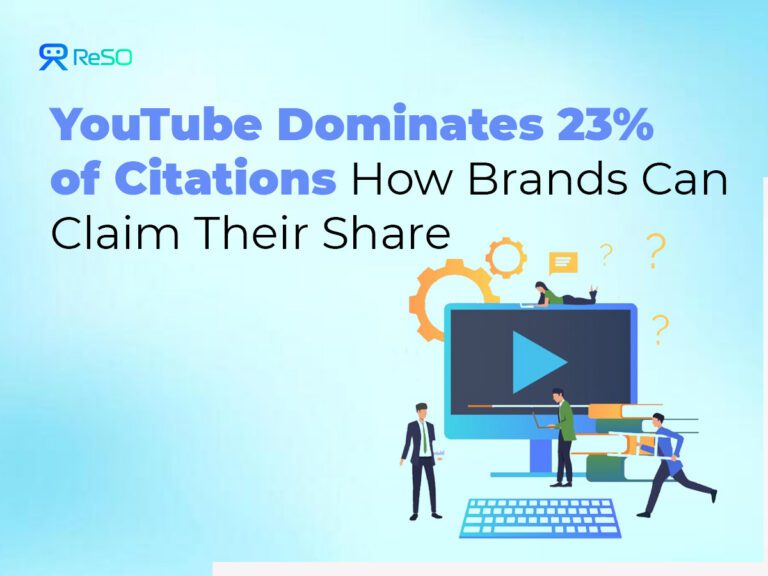
While marketers obsess over optimizing blog posts and landing pages for AI search, video content is quietly dominating AI citations at rates that make text-based content look obsolete.
YouTube is cited 200 times more frequently than any competing video platform and appears in nearly one-third of all Google AI Overviews, making it the single most-cited domain overall.
For B2B brands still treating video as supplementary content rather than a core AI search strategy, the competitive gap is widening fast. The brands claiming citation share in AI answers are the ones leveraging video’s multimodal advantage to dominate how AI engines answer technical, instructional, and product-related queries.
Key Findings
- 1. YouTube’s monopoly is massive: 200x more citations than Vimeo/TikTok, 29.5% of Google AI Overviews (BrightEdge May24-Sep25), growing +25.21% since Jan 2025.
- 2. Industry citation leaders: Healthcare (41.97% YouTube), E-commerce (30.87%), B2B Tech (18.68%): visual demos crush text for procedural queries.
- 3. Text loses to video: 20-page PDFs rarely cited; 5-minute demo videos dominate “how-to” answers AI engines trust.
- 4. Proven formats win 60%+ citations: Step-by-step tutorials, problem-solution, comparisons, visual proof demos match decision queries perfectly.
- 5. Technical optimization formula: Timestamp chapters + transcripts, Question-based tags/keyword descriptions, Clear audio + logical visuals, Source citations for credibility.
- 6. B2B production framework: Audit blogs/PDFs for video potential, Match format to intent (screen records, animations), Hit quality thresholds and YouTube-optimize + measure citations.
- 7. Strategic imperatives: Reallocate budget (video = blog parity), hire video producers, invert workflows (video first, text support), track citation share not views; the early movers compound authority fast.
YouTube’s Citation Dominance Across AI Platforms
BrightEdge analysis (May 2024–Sep 2025) shows YouTube dominating AI citations at 20% overall, 29.5% in Google AI Overviews.

YouTube Citation Dominance Table
| Platform/Metric | YouTube Share | Key Comparison | Growth Trend |
| All AI Platforms | 20% | #1 overall | Steady lead |
| Google AI Overviews | 29.5% | Mayo Clinic (12.5%) | +25.21% since Jan 2025 |
| Perplexity | 9.7% (#5) | – | Consistent presence |
| ChatGPT | 0.2% (growing) | +100% WoW | Rapid acceleration |
| Vs. Competitors | 200x > Vimeo (0.1%) | TikTok (0.1%), others 0% | Near-monopoly |
Industry-Specific Citation Patterns
Video citation rates in AI Overviews vary by industry, with healthcare leading at 41.97%, revealing strategic priorities for B2B video investment.

| Industry | YouTube Citation % | Key Drivers | B2B Opportunity |
| Healthcare | 41.97% | Exercise demos, procedures | Highest ROI for visual content |
| E-commerce | 30.87% | Product unboxings, comparisons | Visual buying decisions |
| B2B Tech | 18.68% | Software tutorials, guides | Replace text docs |
| Finance | 9.52% | Pricing/policy visuals | Emerging pioneer space |
| Travel | 8.65% | Booking/procedure demos | Text-dominant, video upside |
The Technical B2B Video Opportunity
Text-based content like 20-page PDFs on database optimization gets cited rarely. AI struggles to extract specific answers from long documents. In contrast, a 5-minute video demonstrating the process gets cited frequently, providing direct visual references AI trusts.
- A 3,000-word blog on cloud migration earns occasional citations for definitions, while a 10-minute walkthrough video matches “how-to” queries perfectly for consistent visibility.
- The same applies to SSO config and troubleshooting: descriptive text underperforms, but live demos dominate.
- Convert whitepapers, docs, and guides into short demo videos to claim AI citation dominance before competitors.
5 Optimization Strategies for Video Citations
1. Structured Architecture Boosts Parseability
Timestamp chapters, keyword-rich descriptions (“how to set up enterprise software”), question-based tags, and full transcripts enable granular AI citations.
2. Winning Formats Dominate Citations
- Step-by-step tutorials (60% citation rate)
- Problem-solution videos
- Comparisons
- Visual proof demos
They all match procedural/decision queries perfectly.
3. Platform-Specific Authority Signals
- YouTube: Build subscribers/views for Google AI (29.5% share).
- Perplexity: Niche expertise (9.7%).
- ChatGPT: Educational growth (+100% WoW).
4. Measure Citation Impact, Not Views
Track frequency, query coverage, platform distribution, and competitive share.
This reveals true AI visibility beyond watch time.
5. YouTube Monopoly Forces Focus
200x > Vimeo/TikTok; prioritize:
- YouTube for healthcare (42%)
- E-comm (31%)
- B2B tech (19%)
These are where video ROI peaks.
The B2B Video Production Framework
Step 1: Content Audit
Inventory high-potential assets: “how-to” blogs, PDF guides, troubleshooting docs, comparison charts. Prioritize by query volume, low current citations, zero competitor videos, and simple production.
Step 2: Match Format to Type
- Tutorials: Screen record + voiceover (Loom/Camtasia)
- Concepts: Animated slides (Vyond) or presentations
- Comparisons: Split-screen demos
- Troubleshooting: Problem → resolution sequence
Step 3: Hit Citation Quality Thresholds
- Audio: Clear mic, no background noise
- Visuals: Logical sequence, no fancy editing needed
- Credibility: Cite sources, show verifiable data
- Structure: Consistent intros/outros/chapters for AI parsing
Step 4: Upload & Optimize
Timestamp chapters, question-based tags (“how to configure SSO”), full transcripts, and keyword descriptions.
Target YouTube.
Strategic Imperatives for B2B Video AISO
Budget reallocation from text to video:
If YouTube captures 29.5% of Google AI Overview citations and instructional content shows 35.6% citation growth, investment should flow proportionally toward video production.
This doesn’t mean abandoning text content. It does mean video deserves budget parity with blog content for technical B2B brands.
Content team composition evolution:
Teams built entirely around writers, editors, and designers need video production capabilities. This might mean hiring video producers, training existing team members on video creation, or partnering with specialized video agencies. But video can no longer be an afterthought handled by whoever has time.
Measurement framework expansion:
Traditional content metrics; blog traffic, ranking positions, and lead conversions, need to incorporate video-specific AI citation tracking. If you’re not measuring how often your videos get cited in AI answers, you’re blind to the primary value video creates in AI search contexts.
Production workflow transformation:
Rather than creating blog posts with occasional supplementary videos, the workflow should become:
- Identify high-value queries,
- Determine if the video best serves the user intent,
- Produce video as primary content, then
- Create supporting text assets.
This inverts traditional workflows but aligns with how AI engines actually cite content.
The brands establishing video citation dominance now, like building YouTube channels optimized for AI discovery, converting core educational content to video formats, and measuring success through citation share rather than just views, are establishing authority advantages that will compound as AI search adoption continues accelerating.
The window for early-mover advantage is closing rapidly. YouTube’s 25.21% citation growth since January 2025 means competitors are recognizing this opportunity and investing accordingly.

The question is whether your brand will be cited among the video sources AI engines trust. Or whether you’ll remain invisible while competitors capture the citation share that drives authority, awareness, and ultimately, business outcomes in an AI-first search landscape.
If you want to know how your competitors’ and your content are cited in AI and make sure that you always get the upper hand in the citation game, then book your call with us here.