Your GTM Isn’t Broken, Your Assumptions Are
We build strategies on what we think should work, not what the market tells us.
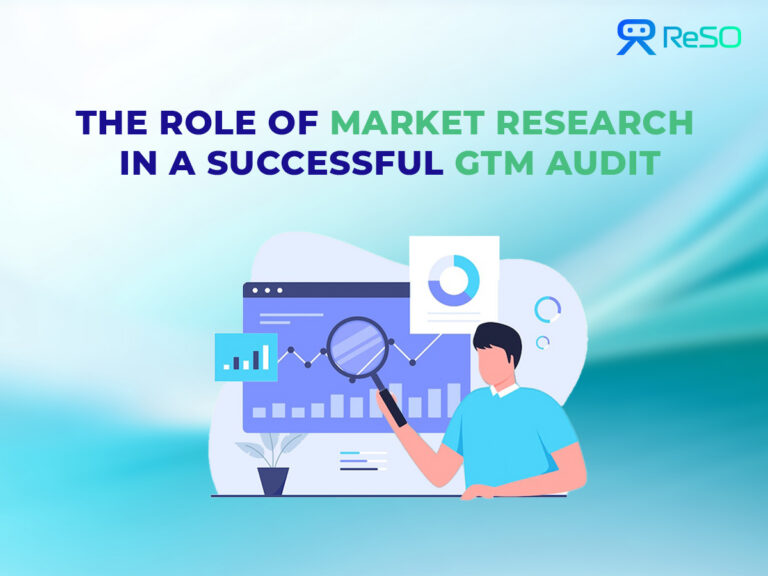
That’s where a GTM audit should come in, where market research isn’t an accessory; it’s the anchor. It reveals the blind spots your CRM can’t. It gives your GTM audit the perspective it needs to challenge beliefs, uncover disconnects, and realign your motion with the market’s reality.
Most GTM audits stop at dashboards. However, the pipeline isn’t just about math; it’s market behavior. Market research isn’t just “nice to have.” It’s the only way to detect misalignment between your GTM motion and buyer reality. Audits that skip market signals only fix surface symptoms. Real turnaround starts with reframing the questions you ask.
Why Market Research Is the Control System of Any GTM Audit
In a fast-changing GTM world, the aim isn’t just to make things run smoother; it’s to make sure you’re heading in the right direction. Internal metrics like KPIs often tell you what has already happened. But market research helps you look outside your company to understand what’s going on in the market right now. We’ve seen B2B companies cut their Customer Acquisition Cost (CAC) by 30%, not by spending more on ads, but by asking smarter questions first.
Why Market Research Matters Before, During, and After the Audit
Market research isn’t just one step in the GTM audit; it supports the whole process.
- Before the audit: It helps validate core assumptions, whether you’re targeting the right audience or if your messaging still fits the market.
- During the audit: It gives context to the numbers; if leads aren’t converting, is it poor targeting, or is a competitor winning on better messaging?
- After the audit, It turns insight into action. Teams can refine messaging, update ICPs, or adjust sales strategies based on how buyers think and make decisions.
5 Audit Domains Where Market Research has a Direct Impact on GTM Precision
1. ICP Drift Detection
Why it matters: The Ideal Customer Profile (ICP) you defined a year ago is probably outdated, thanks to restructuring, shifting market dynamics, and AI reshaping roles.
Audit signals to look for:
- Declining ICP-to-conversion ratio
- Strong performance in one subsegment, weak in others
- SDRs reporting more “off-fit” responses
How research helps:
Run a delta analysis between your current high-fit customers and the original ICP. Layer in firmographic, technographic, and intent data to spot shifts in who’s buying.
2. Messaging-Market Mismatch
Symptoms: You’re seeing high click-through rates but low demo conversions; or worse, demos without urgency or follow-through.
Research interventions:
- Compare voice-of-customer interviews with current messaging
- Gather qualitative feedback on how you stack up against competitors
- Analyze “no decision” losses for signs of unclear or misaligned value props
Fix: Use resonance mapping to align your language, value claims, and buyer maturity, so your message hits home.
3. Channel Attribution vs. Buyer Behavior
The mismatch: You’re doubling down on ROAS and visible metrics, meanwhile, your buyers are learning in places you can’t track: dark social, Slack groups, podcasts.
What research unlocks:
- Map pre-click vs. post-click influence
- Benchmark intent across cold vs. warm channels
- Audit peer-group influence (e.g., LinkedIn conversations, community buzz)
Audit lens: Are you investing in the visible 30% of the buyer journey while ignoring the invisible 70%?
4. Packaging & Pricing Friction Points
What GTM audits often miss: Pricing isn’t just math, it’s psychology. How you package and price frames affects how buyers perceive value.
Research signals to surface:
- Objection patterns from sales calls
- Pricing elasticity tests based on market willingness-to-pay
- Budget cycle analysis across different ICP tiers
Fix: Consider dynamic tiering, use-case-specific bundles, or shifting from per-seat to usage-based models, especially when the value perception varies by segment.
5. Innovation Readiness & Product Timing
False positive: You believe you’ve hit Product-Market Fit (PMF); the market sees you as “too early” or unclear.
How market research steps in:
- Hesitation isn’t always about missing features; it’s often about trust and timing
- Track adjacent trend surges to spot category timing signals
- Compare analyst narratives with how real customers are framing your product
Fix: Before doubling down on your roadmap, prioritize market education. Sometimes, it’s not about shipping more, it’s about shifting perception.
5 Research Methods Every GTM Team Should Use, and How to Get the Most Out of Them
1. 1:1 Decision-Maker Interviews
Best for: Refining your ICP and sharpening your messaging.
Tip: Don’t ask what they want, ask what they rejected and why. You’ll uncover deeper insights about what doesn’t resonate and where your assumptions may be off.
2. Competitive Win/Loss Dissections
Best for: Understanding your real market position.
Tip: Bring in a neutral third party to run these interviews. It reduces bias and encourages more honest, detailed responses from buyers, especially when you lose the deal.
3. Intent Cluster Analysis
Best for: Deciding where to spend your marketing dollars.
Tip: Don’t just look at clicks. Compare what content buyers consume (e.g., podcasts, LinkedIn posts) versus what they click on. The difference often reveals hidden influence channels.
4. Behavioral Shadowing
Best for: Uncovering the earliest steps of the buyer journey.
Tip: Track what buyers do before they land on your site. This helps you de-anonymize the true path to purchase and identify gaps your current tracking misses.
5. Pricing Sensitivity Surveys
Best for: Getting your pricing right based on real buyer psychology.
Tip: Use proven models, such as Gabor-Granger or Van Westendorp, to avoid random pricing guesses.
These methods help you find what customers are willing to pay, and why.
The ACT Model: Embedding Market Research at Every Stage
Audit → Inputs → Insight
Start by pressure testing your internal data. Market research doesn’t just add context; it challenges your assumptions. Dashboards can show what’s happening, but research explains why.
Consult → Insight → Design
You can’t design an effective GTM motion without first understanding buyer behavior. Research helps translate insights into informed strategy, not guesswork.
Train → Design → Execution
Sales and marketing teams move faster and align better when they’re armed with real buyer intelligence, not just battle cards and scripts. Research-driven enablement leads to sharper execution.
Your GTM Audit is only as good as the Signals you prioritize
Strong GTM audits don’t begin with dashboards; they start with the right questions.
And without market research, you’re just optimizing in a vacuum, refining tactics without challenging the fundamentals.
“Strategy isn’t what you decide, it’s what you discover.”
If you’re not equipped to run deep research internally, several specialized firms can help bridge the gap:
- Sprouts.ai – Behavioral buyer research, ICP recalibration, messaging audit
- ReSO – End-to-end GTM optimization, from pipeline health to buyer interviews and sales enablement feedback
- DoubleCheck Research – Win/loss interviews, competitive positioning insights
These companies don’t just deliver data, they reveal the story your dashboards can’t tell, helping you see your GTM motion through the eyes of your buyers. So, what are you waiting for? Book a call with ReSO to get equipped now.
Frequently Asked Questions
1. Why does market research matter in a GTM audit?
Because dashboards show what’s happening, research explains why. It’s how you fix the real problem, not just the metrics.
2. When should I run market research, before or after the audit?
Both. Before testing assumptions, to add context, and after to turn findings into market-aligned action.
3. What’s the easiest research move to start with?
Talk to your buyers. A few honest 1:1 interviews will reveal more than a quarter’s worth of pipeline data.
4. What types of market research are most effective for GTM strategy validation?
The most effective GTM validation research includes buyer interviews, win/loss analysis, intent analysis, and pricing research. These directly validate ICP fit, messaging relevance, and willingness to buy, reducing GTM misalignment before scaling.
5. How does market research improve GTM alignment and conversion?
Market research improves GTM alignment by revealing how buyers actually think, choose, and decide. It aligns ICPs, messaging, channels, and pricing with real buyer behavior, reducing friction and increasing conversion rates across the funnel.