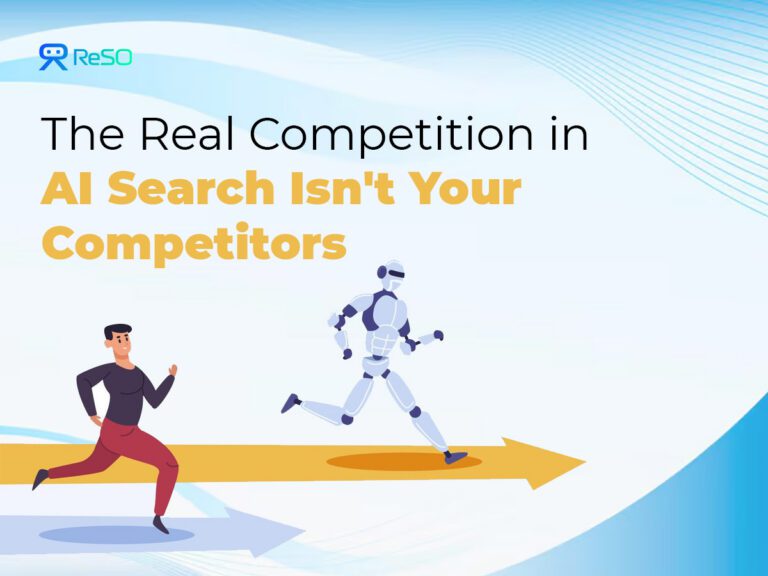
You’re tracking your competitors religiously. You know exactly where they rank for every keyword, what content they publish, and how their domain authority compares to yours.
Your entire enterprise search engine optimization strategy is built around outranking them. However, the uncomfortable truth is that in AI search, you’re losing to Wikipedia, Reddit, YouTube, and government documentation hubs: sources you’ve never benchmarked against because they don’t look like competitors.
This represents one of the most critical blind spots in generative engine optimization today. While marketers obsess over traditional competitive analysis, AI engines are choosing completely different types of sources to cite and trust.
Understanding this shift is existential for visibility in the age of AI-powered search.
Key Takeaways
- Reference platforms’ own AI citations: YouTube (23.3%), Wikipedia (18.4%), and Google.com (16.4%) capture most AI Overviews per Surfer’s 36M citation study, brands remain largely invisible.
- Reddit crushes every industry: 66,000+ AI mentions across 11 sectors show community platforms beating expert content due to built-in trust signals.
- AI prioritizes 3 trust factors: Verification safety, Entity authority, and Neutral tone
- Track citation share vs. reference archetypes instead; your real rivals are platforms you’ve never analyzed.
- Excel in product comparisons, how-tos, and current expertise where reference sources lack commercial depth.
- Genuine Reddit/YouTube participation creates the community signals AI engines crave.
- Measure % of category citations, commercial citation share, and reference-query visibility, not rankings or traffic.
- Brands can’t replicate Wikipedia’s neutrality or Reddit’s voting, so compete where your unique advantages (recency, specificity, commercial insight) beat generic reference content.
The Citation Hierarchy That Changes Everything
Recent research analyzing AI citation patterns across major platforms reveals a striking pattern.
Data from Surfer’s AI Tracker examining 36 million AI Overviews and 46 million citations between March and August 2025, three domains dominate AI’s citations across nearly every industry:
- YouTube at approximately 23.3%
- Wikipedia at roughly 18.4%
- Google.com at around 16.4%.
Close behind are Reddit, LinkedIn, and Facebook, which contribute a growing share of contextual and community-driven insights.
For context, these are reference-style platforms that most brands would never consider “competitors” in traditional SEO. Yet they’re capturing the vast majority of AI citations while brand content remains largely invisible.
The pattern repeats when examining specific AI platforms. Analysis tracking citations across 11 sectors and more than 800 domains found that Reddit alone accumulated approximately 66,000 AI mentions across all 11 sectors studied, appearing in the top 50 cited URLs for nearly every industry examined.
These are trusted source archetypes that AI engines default to when deciding which content deserves citation.
This creates a fundamental problem for traditional competitive analysis. You can’t outrank Wikipedia by having better content about your industry. You can’t compete with Reddit by publishing more expert analysis.
Why AI Engines Prioritize Reference Sources
Verification Safety at Scale, Entity Authority Over Topical Expertise, and Neutral Tone as a Trust Proxy explain key challenges in AI citation patterns:
Key Concepts
| Concept | Core Challenge | Proxy Signals & Examples | Implications for Brands |
| Verification Safety at Scale | AI can’t verify every claim, defaults to pre-validated sources | Wikipedia citations, Reddit voting, YouTube engagement | Build third-party citations and community signals for trust |
| Entity Authority Over Topical Expertise | Prioritizes entity-level trust over topic-specific content | NIH blanket authority, PubMed/CDC dominance in healthcare | Compete on institutional recognition, not just depth |
| Neutral Tone as a Trust Proxy | Avoids promotional language linked to bias | Wikipedia NPOV, non-commercial Reddit/YouTube | Shift to educational positioning over marketing tone |
Supporting Evidence
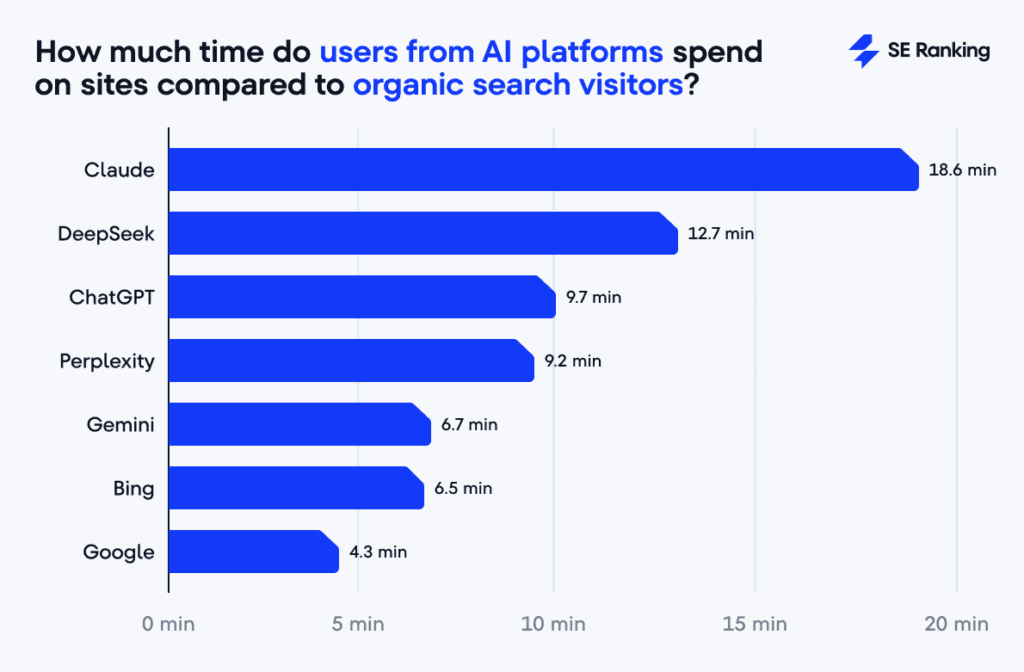
Profound’s analysis shows citation concentration in trusted entities like Wikipedia (47.9% top sources in ChatGPT). SE Ranking data highlights engagement from neutral, high-trust referrals like Claude’s 19-minute sessions.
Strategic Takeaways
- Focus on external validation networks.
- Target entity-building via partnerships.
- Audit content for a neutral, factual tone to match AI preferences.
What are the Best AI Solutions for Visibility Improvement
AI won’t replace SEO, but demands redefining optimization around AI trust hierarchies rather than page tweaks.
- Avoid encyclopedic queries: Target product comparisons, guides, and how-tos where brands excel.
- Build platform presence: Participate genuinely on Reddit/YouTube for authentic authority.
- Create reference content: Develop docs, research, and education without sales intent.
- Strengthen entity authority: Diversify backlinks, brand searches, and third-party citations.
Measuring Success Differently
Traditional SEO metrics like rankings and traffic miss AI search performance.
Track citation share instead, such as your percentage versus reference sources in your category, brand presence among all commercial citations, and citations earned in reference-dominated queries.
The Future of AI Search Competition
The uncomfortable reality is that most brands won’t become trusted reference sources in the way Wikipedia, Reddit, or institutional documentation sites are. These platforms have structural advantages: no commercial motivation, community validation, and decades of accumulated trust signals that brands cannot replicate.
However, recognizing this reality is the first step toward an effective strategy. The brands that succeed in AI search will be those that identify where their unique advantages are:
- Current information
- Specific expertise
- Commercial understanding
Create value that AI engines can’t get from reference sources.
They’ll also be brands that recognize the competitive landscape has expanded far beyond traditional business rivals. Success requires benchmarking against the sources AI engines actually cite, understanding the trust signals those sources possess, and building similar signals within contexts where brands can authentically compete.
The question is whether brands will continue analyzing the wrong competitors while losing visibility to source archetypes they never considered part of the competitive landscape.
Your real competition in AI search is Wikipedia, Reddit, YouTube, government documentation, academic journals, and every other reference-style source that AI engines have learned to trust by default. The sooner you start measuring your performance against reference sources rather than just competitors, the sooner you can build strategies that actually work in the AI search era.
Stop tracking competitors. Start tracking the trusted source archetypes that are actually winning AI citations.
And if you want to know how & where you are cited the most among LLM, book a call with us here.