When ChatGPT mentions your brand in an answer to 10,000 users but only 50 click through to your website, is that success or failure?
If you’re measuring AI search the same way you measure traditional SEO by tracking clicks and traffic, you’re completely missing the point.
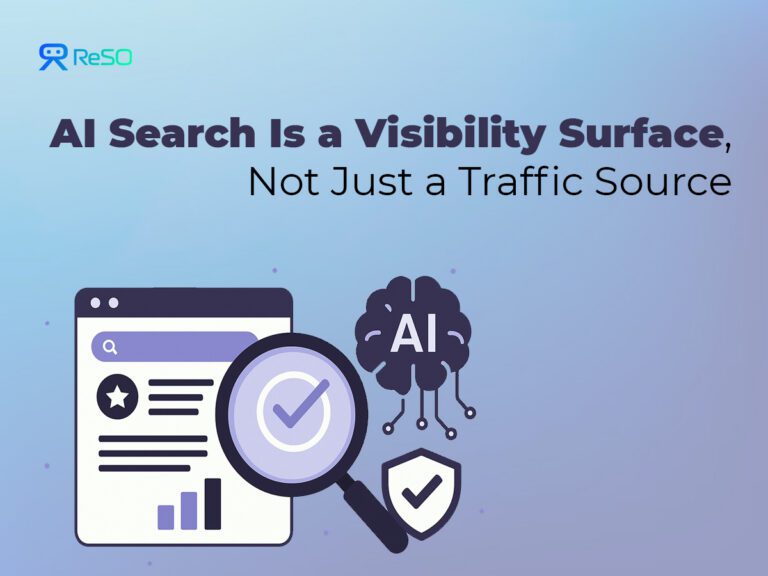
AI search represents a shift in how visibility works online. It’s a visibility surface where brand mentions and citations create influence before clicks happen, reshaping how customers discover, evaluate, and remember brands in ways that traditional analytics can’t capture.
Key Findings:
- AI visibility (r=0.02 traffic correlation) builds trust at decision moments; track share-of-voice vs. competitors over pageviews.
- LLM traffic converts 4.4x better than organic due to pre-qualified context, using GA4 regex for ChatGPT/Perplexity spikes.
- SEO drives conversions (76% AI citations from top-10 pages); layer AI signals (schema, headers) for awareness.
- Citation frequency + mentions create compounding authority; 84% brands miss this “great decoupling” advantage.
- Low click ≠ failure. 8.5K-visit sites earn 23K citations while giants underperform; prioritize influence.
The Decoupling of Visibility and Traffic
AI citations show no correlation with traffic (r=0.02), marking “the great decoupling” where visibility doesn’t drive clicks.
Visibility vs. Traffic
| Finding | Data Point | Implication |
| Correlation Coefficient | 0.02 across millions of citations | High visibility ≠ high traffic |
| Traffic-Citation Disconnect | 8.5K visits → 23K citations; 15B visits → fewer citations | Low-traffic sites win AI exposure |
| Click Impact | AI Overviews reduce clicks by 34.5% | More impressions, fewer CTRs |
Rethink value beyond traffic volume.
Citations Build Authority That Traditional Metrics Miss
- When an AI engine cites your content in response to a user’s query, something valuable happens that doesn’t show up in Google Analytics.
- The user receives your brand’s perspective, expertise, or data within the answer itself.
- Often without needing to visit your site. They’re influenced by your content at the exact moment they’re forming an opinion or making a decision.
This is visibility as influence rather than visibility as traffic.
Research analyzing how citations and mentions impact visibility in AI search studied over 45,000 citations across 800 queries and found that brands earning both a citation and a mention were 40% more likely to resurface across multiple query runs than brands earning citations alone.
This suggests that combined visibility creates a compounding authority effect that strengthens over time.
The strategic implication is significant: consistent presence in AI answers builds brand authority even when those citations don’t immediately drive clicks. When your research, insights, or expertise repeatedly appear in AI responses across your category, you become the trusted source in users’ minds, a form of brand-building that traditional traffic metrics completely miss.
Brands that achieve sustained citation frequency demonstrate authority signals that AI engines recognize and reward, creating a visibility advantage that compounds over time.
LLM Referral Traffic: Small Volume, High Intent
AI citations generate high-value traffic worth 4.4x more than organic search visitors due to pre-qualified intent and engagement.
5 Reasons AI Referral Traffic Outperforms Organic
- Pre-qualified visitors are users who arrive with AI-provided context, boosting conversions from clearer intent.
- LLM referrals show 4.4x value via deeper sessions and qualified leads.
- Track with GA4 Regex. Filter referrals from ChatGPT, Perplexity, Claude, Gemini, Copilot for visibility.
- Free AI platforms hide referrals. Watch spikes on cited landing pages.
- New measurement standards are needed. Standard analytics lumps AI traffic, obscuring its superior performance.
What Citations Actually Measure
AI citations measure the share of voice in AI conversations and authority signals, not just traffic.
1. Track Citation Share:
Measure your brand’s % in AI responses vs. competitors for category awareness. Run 50+ queries weekly across ChatGPT/Perplexity; tools like Profound or Semrush AI Visibility show gaps instantly.
2. Close Mention-Citation Gap:
Boost authority with citations, quotes, structured data (+40% visibility). Brands earning both mentions & citations resurface more often; add FAQ schema + inline refs to convert “cited” into “recommended.”
3. Embrace Fluctuation:
Monitor over windows; 57% drift is normal. Use schema, headings (2.8x citations) for stability. AI rankings shift daily; 30-day averages reveal trends while H2/H3 structure + fresh stats anchor volatile queries.
Optimizing for Visibility, Not Just Clicks
| Area | Shift From | Shift To | Key Stat |
| Measurement | Traffic, rankings, CTR | Citation frequency, mention share, sentiment, quality | Only 16% of brands track AI metrics |
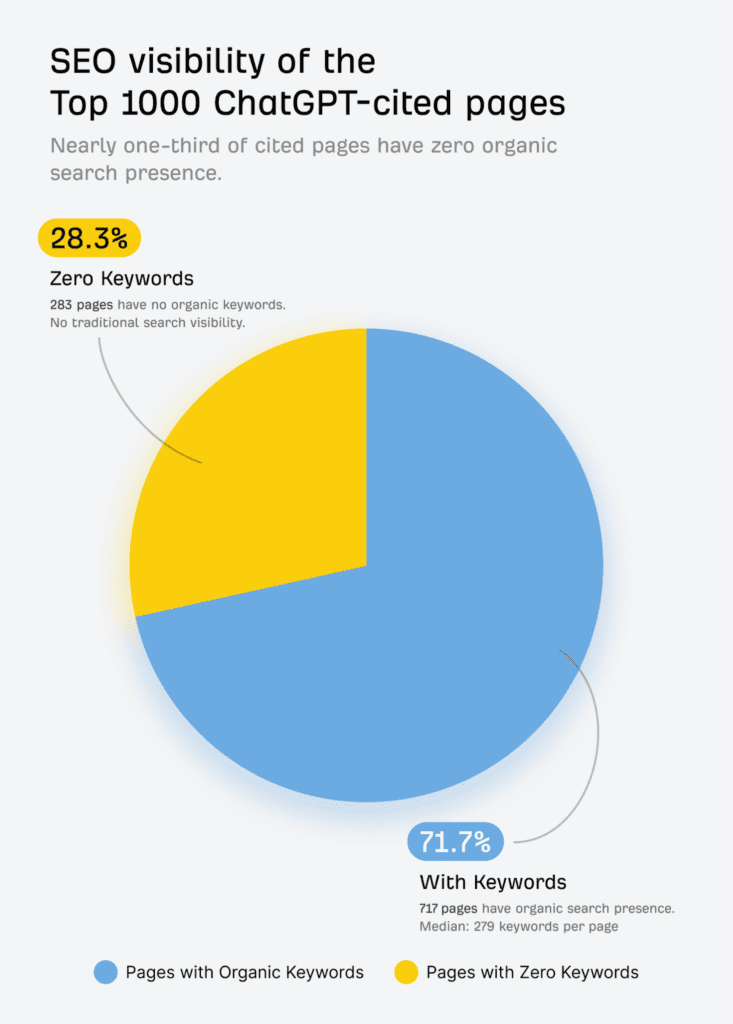
| Content Foundation | Traditional SEO only | Dual SEO + AI parsing (facts, headers, citations, schema) | 76% citations from top-10 pages; 28% ChatGPT cites zero-Google pages |
The Strategic Reality: Both Matter
The most critical mistake would be abandoning traditional SEO for exclusive focus on AI optimization. Data consistently shows that traditional search engines still drive the vast majority of website traffic and will continue to do so for the foreseeable future. The winning approach combines both, recognizing that each serves different purposes in the customer journey.
Traditional SEO drives traffic, conversions, and immediate business outcomes. AI search visibility builds brand awareness, establishes authority, and influences consideration before clicks happen.
These are complementary strategies that together create comprehensive visibility across the evolving search landscape.
- Brand authority shows the strongest correlation with AI visibility, making investments in brand building essential for long-term AI search success.
- Web mentions, branded search volume, and consistent third-party recognition all contribute to the entity-level authority signals that AI engines evaluate when deciding which sources to trust and cite.
The relationship between paid and organic search also becomes more important as organic visibility grows more unpredictable with AI features.
Paid search continues appearing above AI Overviews and organic results, maintaining consistent visibility even as AI citations shift attention away from traditional organic listings.
Treat AI search as a visibility surface, not just traffic, track citations and mentions now for early baselines.
- Frame as an additive reach to secure executive buy-in.
- Accepting non-click visibility builds long-term authority.
- Prioritize citations over traffic for decision-stage presence.
And if you’re looking to optimize for showing up in AI-powered search results, book a call with ReSo.
Frequently Asked Questions
1. What makes AI search different from traditional SEO?
AI search acts as a “visibility surface” where citations and mentions influence users directly in responses, not just drive traffic, unlike SEO’s focus on clicks and rankings.
2. Why don’t AI citations correlate with traffic?
BrandLight data shows r=0.02 correlation across millions of citations; a site with 8.5K visits earned 23K citations while 15B-visit domains got fewer, marking “the great decoupling.”
3. Is low click-through from AI a failure?
No, citations deliver influence at decision moments without site visits. Brands with citations + mentions resurface 40% more often, building compounding authority.
4. How valuable is AI referral traffic?
LLM referrals are worth 4.4x organic visitors due to pre-qualified intent and higher engagement; track via GA4 regex for ChatGPT, Perplexity, etc.
5. What should teams measure instead of traffic?
Track citation share vs. competitors, mention-citation gaps, and fluctuation (57% normal drift). Only 16% of brands monitor AI metrics systematically.