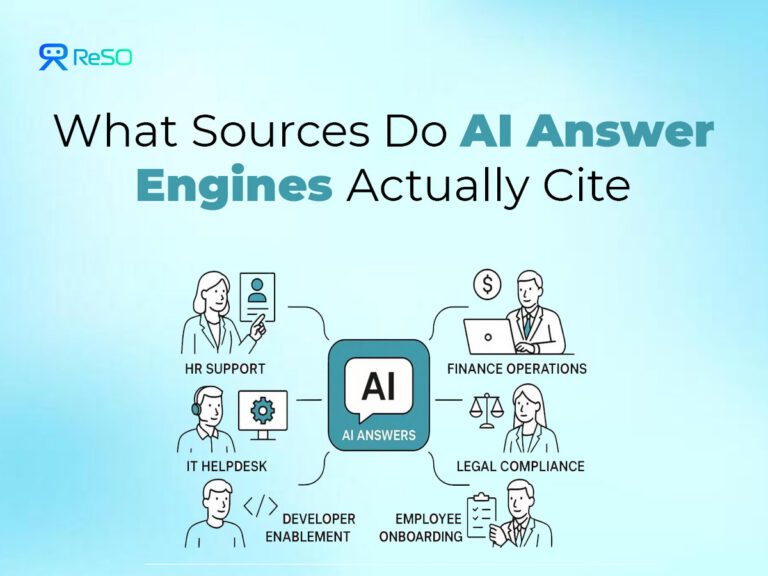
Most content about AI search optimization focuses on how to optimize. But very few answer the more fundamental question: Who are the winners by default? When you ask ChatGPT, Google AI Overview, Perplexity, or Claude a question, which sources do these AI engines actually cite?
According to Profound, examining 680 million AI citations from August 2024 to June 2025, distinct patterns emerge in how each AI engine sources information.
Wikipedia dominates ChatGPT at 7.8% of all citations, more than any other single source. Reddit emerges as the leading source for both Google AI Overviews (2.2%) and Perplexity (6.6%).
Meanwhile, .com domains represent over 80% of citations across all platforms, but within that majority, specific sites capture disproportionate shares.
If you’re trying to figure out how to cite Google AI Overview or understand the best citation analysis options for optimizing AI search, you first need to know which sources AI engines inherently trust.
The answer reveals that authority in AI systems is assigned through specific, measurable patterns, and those are exactly the patterns this analysis uncovers.
Key Findings:
- ChatGPT favors Wikipedia (7.8%, 47.9% of top 10 sources), Perplexity/ Google AI Overviews prioritize Reddit (6.6%/2.2%), Google heavily cites YouTube (9.5%).
- 77.97% of all AI search referrals, making Wikipedia-style neutral depth the top optimization priority.
- Google AI Overviews loves format diversity: Balanced citations across Reddit, YouTube, Quora, Wikipedia; create video transcripts, lists, and guides for multi-format coverage.
- Perplexity demands authentic community + reviews: Reddit (6.6%) + G2/Gartner/NerdWallet dominate. Answer r/[niche] questions genuinely; optimize review profiles quarterly.
- Claude traffic converts deepest: 19-minute average sessions (67+ min EU); target technical docs/academic-style analysis for complex queries.
- Universal boosters work everywhere: .com domains (80%+ citations), 25.7% fresher content bias (under 1,064 days), 30% citation lift from schema markup.
- Don’t spray and pray: Focus on each engine’s top 3-5 sources. Build Wikipedia-style depth and platform-specific presence (Reddit for Perplexity, YouTube for Google) rather than generic content.
The Big Picture: Citation Volume Across Platforms
Before diving into platform-specific patterns, understanding overall AI engine traffic distribution provides critical context.
According to SE Ranking’s research analyzing referral traffic between January and April 2025, ChatGPT dominates with 77.97% of all AI search traffic globally. Perplexity trails at a distant 15.10%, while Google’s Gemini holds 6.40%. Claude (0.17%) and DeepSeek (0.37%) barely register in market share but show interesting growth dynamics.
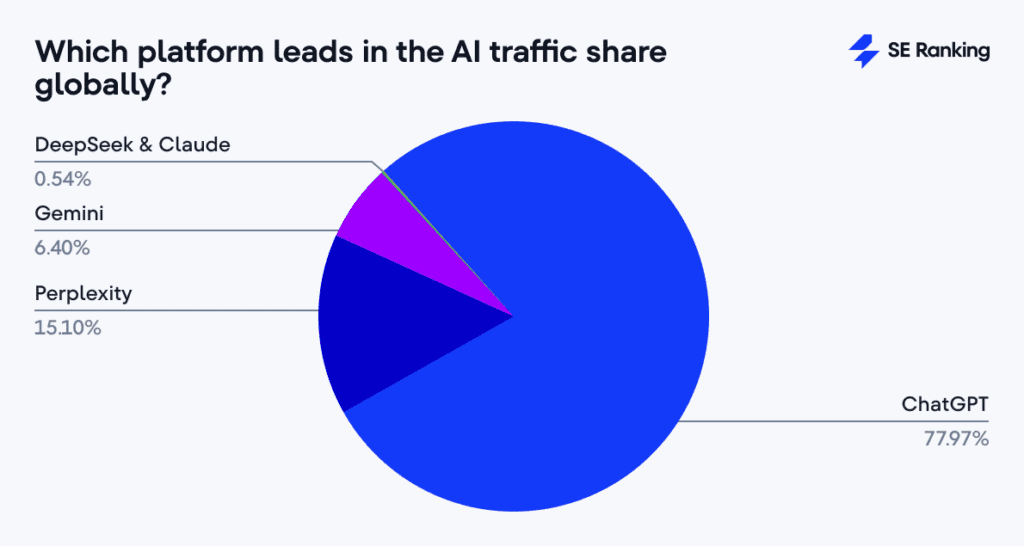
The implications are clear:
- When optimizing for AI citation, ChatGPT represents the overwhelming priority by volume.
- However, platform-specific differences in citation patterns mean the sources ChatGPT trusts differ from those Perplexity or Google AI Mode favors, requiring nuanced strategies rather than one-size-fits-all approaches.
ChatGPT: Wikipedia Dominance and Community Validation
| Aspect | Wikipedia Effect | Community Platforms (Reddit) | Platform Recommendations |
| Citation Share | 7.8% total (47.9% of top 10) | 1.8% total | N/A |
| Query Type | Factual/encyclopedic | Subjective/experiential (“What do people think?”) | All intents |
| Why AI Cites | Neutral, comprehensive, Wikipedia pages boost brands 50%. | Authentic user perspectives. | Definitive, neutral references |
| Brand Action | Create Wikipedia-style owned content | Engage authentically in discussions | Deep coverage + Reddit presence + neutral tone. |
Google AI Overviews: Balanced Distribution Across Formats
Multi-Format Preference
- According to Profound’s data, Google AI Overviews show balanced distribution across source types.
- Reddit leads at 2.2%, followed closely by YouTube at 9.5% (within top sources), Quora at 3.6%, and Wikipedia at 5.7%.
- This diversity reflects Google’s advantage in accessing its own ecosystem; YouTube is a Google property, making video content particularly citable in AI Overviews.
- The balanced approach suggests Google AI Mode prioritizes demonstrating breadth rather than relying heavily on any single authoritative source.
- This creates an opportunity for diverse content types: video, community discussion, traditional web pages, and authoritative references all earn citations.
The YouTube Advantage
Google’s AI heavily favors YouTube content, with videos increasingly appearing in Google AI Overview responses. To optimize, creators should:
- Develop detailed video descriptions with timestamps
- Include comprehensive transcripts uploaded as subtitles
- Use descriptive titles matching natural question patterns
- Cover topics in depth (15-30 minute videos outperform short clips)
Platform-Specific Recommendations
To optimize for Google AIO prioritize YouTube with full descriptions/transcripts. Then nail traditional SEO (top organic ranks win citations). Diversify formats (video, lists, guides). And engage LinkedIn for B2B queries.
Perplexity: Community-First, Research-Oriented
| Rank | Source | % of Citations | Query Sweet Spot |
| 1 | 6.6% | “Real user experiences,” opinions. | |
| 2-6 | G2, Gartner, NerdWallet, PCMag, Yelp | High (top tier) | “Best [product/service]” reviews. |
What You Can Do:
- Reddit: Answer questions authentically in r/[yourniche]
(No spamming. Perplexity spots promotional noise)
- Reviews: Claim/optimize G2, Capterra, Trustpilot profiles
(Complete specs, respond to reviews, update quarterly)
- Content: Write research-style guides with data tables
(Think: “G2 vs Capterra analysis 2026”)
- Tone: Transparent + factual (researchers hate hype)
Claude: Emerging Patterns and Distinctive Behavior
Quality Over Quantity
Early analysis suggests Claude demonstrates a strong preference for authoritative, well-sourced content.
SE Ranking’s engagement data reveals that Claude users show staggering session durations, averaging almost 19 minutes globally, with EU users spending over 67 minutes on sites arriving from Claude. This suggests Claude traffic, while small in volume, demonstrates exceptionally high intent and engagement when it does occur.
Preliminary patterns indicate Claude shows a preference for technical documentation, academic sources, and in-depth analysis over quick-answer formats. This aligns with Claude’s positioning for more complex, nuanced queries rather than simple factual lookups.
Cross-Platform Patterns
Domain Authority Still Matters
.com domains dominate AI citations (80%+), .org second (11.29%). Link quality correlates more strongly (0.65) than domain authority: target contextually relevant links from trusted domains.
Freshness Increasingly Critical
All AI engines show bias toward recent content. Analysis reveals AI systems cite content that’s 25.7% “fresher” on average (posted or updated within 1,064 days) compared to traditional search preferences (1,432 days).
This recency bias means maintaining content freshness through regular updates becomes essential for sustained AI visibility.
Structured Data Provides Advantage
- Schema markup and structured data improve AI citation rates.
- When content explicitly defines what it contains through semantic markup, AI engines more confidently extract and cite that information.
- One analysis found that schema markup improved source citation by approximately 30%.
Building Multi-Platform AI Visibility
| AI Engine | Top Strategies |
| ChatGPT | Wikipedia-style depth, authentic Reddit engagement, factual > promotional. |
| Google AI Overviews | YouTube w/ transcripts, strong organic SEO, format diversity. |
| Perplexity | Reddit + reviews (G2/Capterra), research guides, transparent data. |
| Universal | Quality backlinks, schema markup, fresh content, platform-specific authority |
- Track AI citations systematically across platforms.
- Use emerging AI visibility tools.
- Understand each engine’s trusted sources for your industry.
- Build presence on high-citation platforms.
- Avoid diffusing efforts across low-value sites.
AI engines cite Wikipedia (ChatGPT), Reddit (Perplexity/Google), YouTube (Google), review sites (commercial queries), and authoritative .com domains (80%+ of citations).
You can’t become these platforms, but create Wikipedia-style depth, join Reddit discussions authentically, build AI-preferred video structure, and optimize owned content for extractability, turning citation patterns into your roadmap.
Found this blog insightful? Join our newsletter to not miss out on any updates about the AI ecosystem.