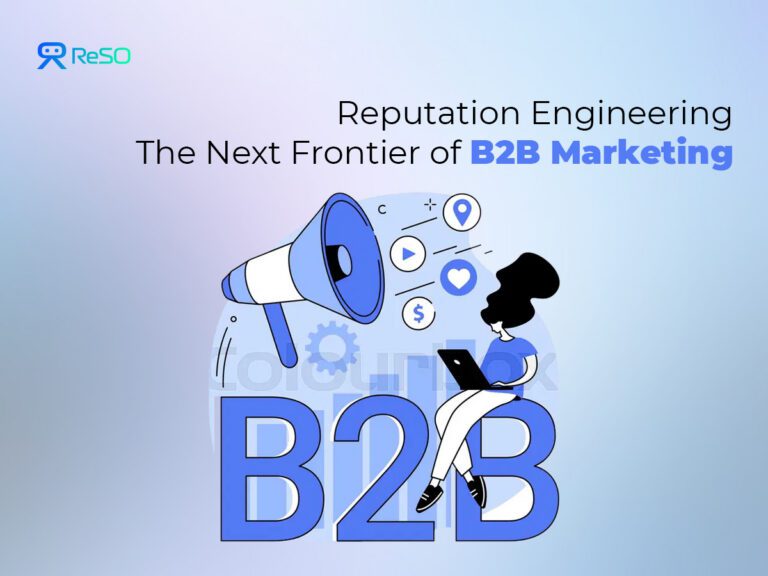
The rules determining B2B visibility have fundamentally changed. For decades, marketers optimized for search engine rankings, assuming that appearing on page one of Google guaranteed discoverability.
But in 2025, a more powerful force determines who gets seen: your engineered reputation across AI systems that increasingly mediate professional discovery.
The data reveals the magnitude of this shift. According to Forrester, 19% of buyers using these AI applications feel less confident in their purchasing decisions due to inaccurate or unreliable information provided by genAI like ChatGPT, Perplexity, and Gemini dominate brand discovery.
Traditional SEO focused on keywords and backlinks. Reputation engineering focuses on authority, accuracy, recency, and trust, the signals AI systems use to determine which brands get cited when the stakes are high and competition is fierce.
Key Takeaways:
- AI systems now dominate B2B discovery over Google, prioritizing authority, accuracy, recency, and trust signals instead of keywords.
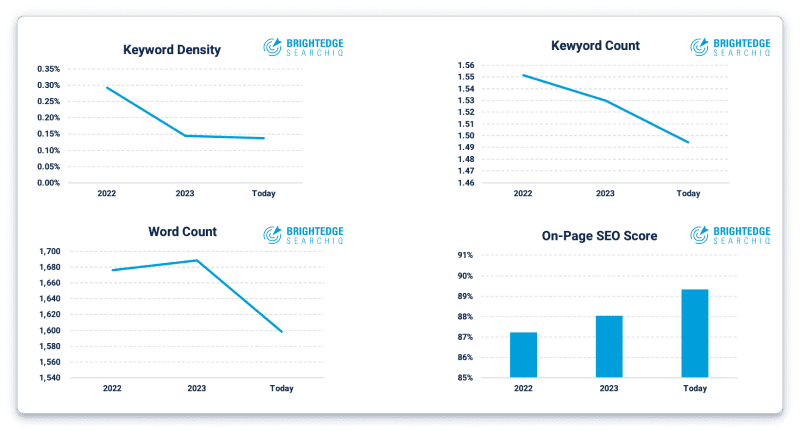
- Top Google pages have 50% lower keyword density than 2 years ago, signaling a shift to quality/E-E-A-T.
- Analyst reports are used by just 14% of B2B buyers (60% drop since 2022) as AI/peer reviews rise.
- 19% of buyers lose confidence from GenAI inaccuracies, costing $10B+ in losses.
- ReSO’s framework scores AI reputation across 5 dimensions (Authority, Accuracy, Recency, Trust Signals, Visibility Breadth) for unified tracking.
- Monthly AI audits, original research/frameworks, cross-platform consistency, third-party validation, continuous monitoring.
Why Reputation = The New Ranking Factor
From Keywords to Authority
Traditional SEO relied on keyword density for rankings. AI prioritizes authority signals like original research and external validation over self-claims. And data proves that.
According to BrightEdge, pages in the top 10 today have a 50% lower keyword density than those ranking a couple of years ago (see top right stat in the figure below).
The Trust Gap Crisis
TrustRadius’s 2025 research shows a widening B2B “trust gap,” with analyst reports consulted by just 14% of buyers; a 60% drop since 2022, as AI discovery rises.
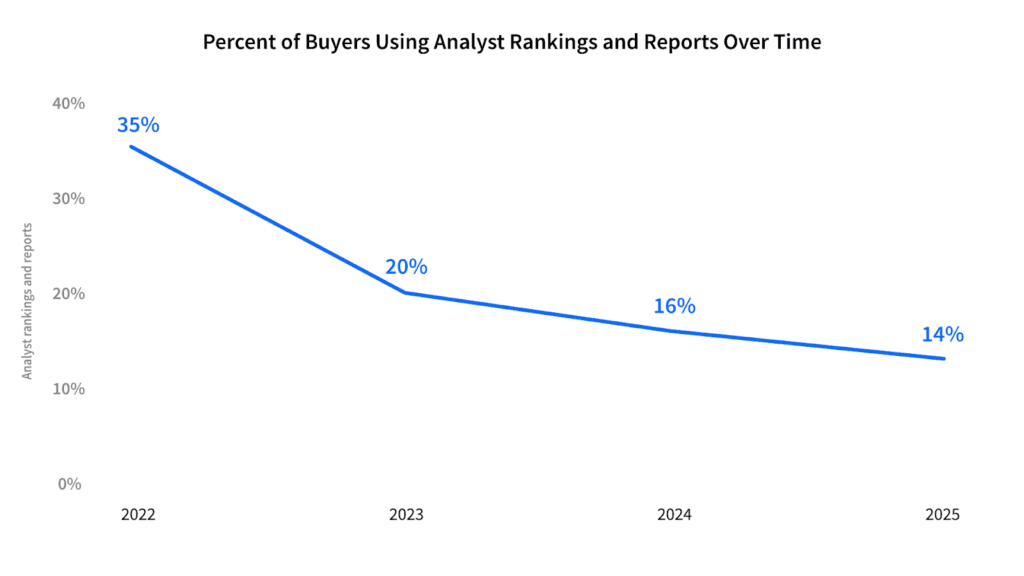
Traditional authorities fade while AI-mediated recommendations dominate visibility. Brands’ engineering AI-recognized reputations seize massive opportunities previously held by analyst reports and review sites. The CRM appearing in ChatGPT’s “best enterprise CRM” answer captures attention when spread across multiple sources.
The Misinformation Amplification Problem
Forrester’s stat, 19% of buyers using AI applications feel less confident in their purchasing decisions due to inaccurate or unreliable information provided by genAI. It isn’t just a statistic; it’s a crisis. When AI systems dominate discovery but frequently misrepresent brands, reputation engineering becomes defensive as much as offensive.
Without systematic reputation management, AI may cite outdated info, attribute competitor features to you, misstate pricing, or ignore you entirely. Errors compound as users trust AI recommendations without verification, damaging business outcomes. Proactive engineering prevents misinformation’s financial/reputational harm.
Components: Authority, Accuracy, Recency, Trust
| Layer | Description | Key Elements | Research Insights |
| Authority: The Foundation Layer | Authority comes from multiple signals: original research, media validation, consistent expertise, and community respect. | Publishing novel research, securing media mentions, speaking engagements, recognized methodologies, and substantive engagement. | Systematic effort compounds authority. |
| Accuracy: The Credibility Multiplier | Accuracy in AI data is a competitive advantage; incorrect data is common (58% AI answers). | Up-to-date profiles, corrected AI inaccuracies, structured company data, consistent messaging, and monitoring AI descriptions. | Brands with accurate AI info outperform misrepresented competitors. Gap highlights areas needing correction. |
| Recency: The Relevance Signal | AI favors current over outdated content; recency boosts reputation and discoverability. | Consistent publishing on current topics, explicit temporal markers, active community engagement, and refreshed case studies. | AI discussion signals credibility. |
| Trust: The Citation Determinant | Trust determines AI’s citation confidence, built on consistency, transparency, endorsements, and peer validation. | Multi-source claim validation, transparent methods, endorsement from credible third parties, case studies, and testimonials. | 91% consumers rely on reviews; peer validation is critical in B2B. Systematic external validation builds AI citation trust (SOCi). |
Tactical Steps for B2B Marketers
Step 1: Audit Current AI Reputation
- Monthly query ChatGPT/Perplexity/Gemini/Claude: “Experts in [domain]?” Document appearances, descriptions, and accuracy gaps.
- Use Google Alerts/Brandwatch/Mention for third-party signals that train AI. Identify desired vs actual AI representation.
Step 2: Build Authority Through Original Content
- Create novel data/insights AI needs to cite. Adobe finds 76% of creators use gen AI for growth, but original research differentiates from generic content.
- Consistent “5-Stage B2B Framework” references make AI associate it with you, boosting citations.
Step 3: Engineer Cross-Platform Consistency
Ensure your expertise is described consistently across LinkedIn, your website, industry directories, review platforms, media mentions, and speaking engagements. Inconsistency creates entity confusion. AI struggles to confidently determine if different descriptions refer to the same entity.
Use identical professional naming, consistent specialization language, aligned descriptions of what you do, and linked presence across platforms. This coherence helps AI build comprehensive entity representations that increase citation confidence.
Step 4: Secure External Validation
- Contribute expert commentary to industry pubs
- Speak at recognized events
- Engage authentically in pro communities
- Secure client reviews on key platforms
- Earn high-authority media coverage
Each external signal outweighs self-claims in AI reputation engineering.
Step 5: Implement Continuous Monitoring
Monthly audits fail—AI updates real-time. Use AI visibility tools tracking ChatGPT/Perplexity/Gemini mentions. Get alerts on brand context/accuracy. Respond fast: report errors, publish corrections in crawlable content.
Unified AI Reputation Score Framework
Reputation in AI-driven discovery is multidimensional. Traditional metrics miss how AI systems cite, represent, and recommend you across platforms. This framework measures AI citation-worthiness through five actionable dimensions, enabling systematic optimization.
Core Dimensions
Evaluate these independently for a unified score:
- AI Authority: Citation frequency vs. competitors in relevant queries
- Accuracy: Correctness of AI-generated descriptions
- Recency: Currency of AI’s knowledge about you
- Trust Signals: External validations/credentials referenced
- Visibility Breadth: Presence across multiple AI platforms
High scores across all dimensions indicate optimal AI reputation engineering.
Calculate Your Score
| Dimension | Manual Check | Action Trigger |
| Authority | Cited in 70%+ queries? | Publish frameworks/research |
| Accuracy | <10% factual errors? | Structured corrections |
| Recency | References <18mo old? | Weekly updates |
| Trust | 3+ external mentions? | Testimonials/media |
| Breadth | Visible in 3+ AIs? | Cross-platform publishing |
Optimization Roadmap
Target weakest dimensions with specific interventions:
Low Authority (0-30):
- Publish original frameworks/research distinctive to you
- Secure guest posts/external citations from high-authority sites
Low Accuracy (0-60):
- Audit all crawlable platforms for errors
- Publish structured corrections with schema markup
- Use AI feedback forms (ChatGPT memory, Perplexity corrections)
Low Recency (0-40):
- Add temporal markers to key content (“Updated January 2026”)
- Publish monthly with fresh data/insights
- Maintain active LinkedIn/X presence
Low Trust Signals (0-30):
- Collect client testimonials with photos/video
- Secure media mentions in industry publications
- Display credentials prominently with verification links
Low Visibility Breadth (0-40):
- Republish frameworks across Medium, LinkedIn, and Reddit communities
- Answer questions on Quora/HackerNews where AIs crawl actively
- Create content optimized for each platform’s format preferences
Act now, your competitors are building uncatchable algorithmic leads. And if you need to know your current brand visibility along with your competitors in one of the most important buyer-intent prompts, book a call with ReSO now.