

Most metadata was built for search engines and social previews. AI systems use it differently. Instead of looking for keywords, they use titles, descriptions, Open Graph tags, and structured data to understand what a page represents and whether its meaning matches the content.
When these signals are vague, inconsistent, or missing, AI models have to interpret the page on their own. That increases the risk of misclassification, weak retrieval, or exclusion from answers altogether.
For AI visibility, metadata is no longer a snippet optimization task. It is a semantic layer that helps models identify your topic, connect it to entities, and decide whether your content is reliable enough to reference.
How Does AI Search Change the Rules for Meta Tags?
The fundamental difference between traditional search engines and modern AI systems lies in how they interpret content.
- Legacy search relied heavily on lexical search, matching exact keywords to a query.
- AI-driven search uses hybrid models that prioritize vector search, matching meaning rather than words by converting text into numerical representations to understand semantic relationships and user intent.
Keyword Density Becomes Less Relevant
AI systems prioritize a concise, accurate summary that reflects the content’s true meaning over repetitive keyword patterns.
Semantic Alignment is Critical
AI models evaluate whether your metadata accurately represents the topics in the body content. When metadata and content misalign, AI systems may misinterpret or ignore your page entirely.
Structured Signals Carry More Weight
Clear, structured data like Open Graph tags and JSON-LD schema provide unambiguous signals that help AI categorize your content with greater accuracy.
Do AI Engines Still Use Title Tags and Meta Descriptions?
Title tags and meta descriptions remain foundational context signals for AI systems. They help define the page’s primary topic and reinforce the intent behind the content.
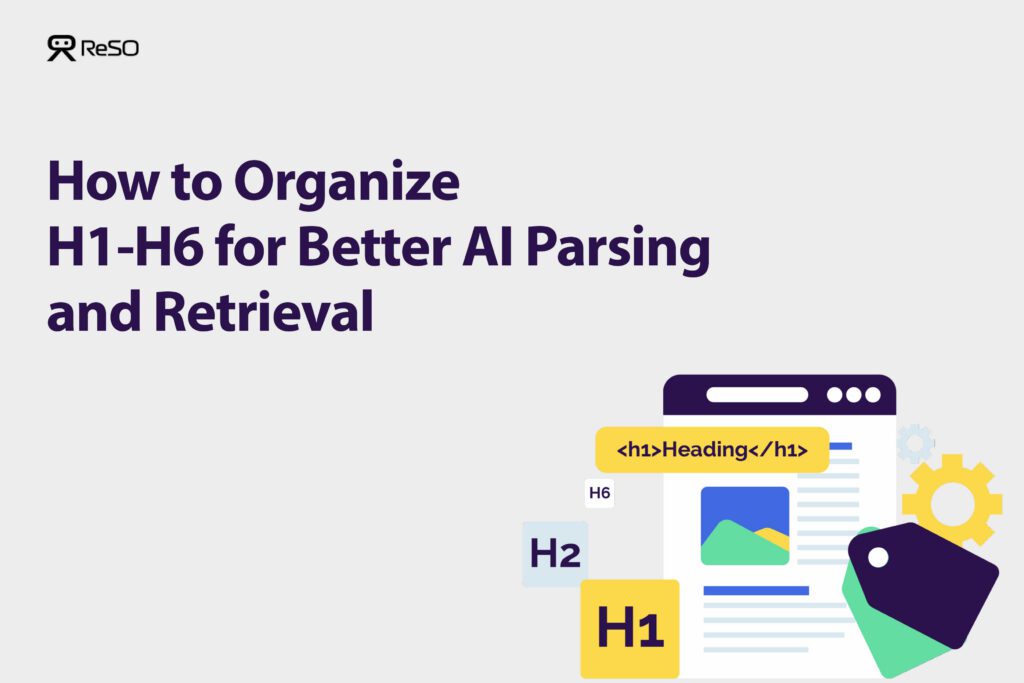
AI models interpret meaning by combining multiple layers of information, including the <title>, headings, body content, Open Graph tags, and structured data. When these elements are aligned, the page is easier to classify, retrieve, and match to relevant queries.
Inconsistent messaging across metadata creates confusion. If the <title>, og:title, H1, and page content describe different angles, AI systems may reduce confidence in the page’s relevance.
The best practice is to treat titles and meta descriptions as semantic summaries of the page’s purpose. Write them to clearly reflect what the page helps the user achieve, and keep them aligned with Open Graph tags and on-page content. This alignment strengthens the overall interpretation layer that supports AI visibility.
Why Are Open Graph Tags and Structured Data Now High-Priority Signals?
Open Graph (OG) Tags
Originally designed for social media previews, OG tags have become a crucial source of structured data for LLM training. When web crawlers index pages, they capture the full HTML, including OG tags. These tags provide clean, labeled data that helps AI models learn semantic meaning at scale.
- The og:title acts as a clear, definitive label for the page’s topic.
- The og:description provides interpretive context, tone, and intent that might not be obvious from body text alone.
- For multimodal AI models, og:image supplies visual context that complements textual information.
Across millions of websites, these tags create a consistent metadata layer that AI can reliably parse and understand.
JSON-LD Structured Data
Complementing OG tags with JSON-LD schema defines entities on your page explicitly. By using schemas like Article, Product, Organization, or FAQPage, you tell AI systems what your content represents, removing ambiguity and making it easier to categorize. The explicit entity definitions reduce the interpretation work AI must perform when pulling information for generated answers.
How Do You Optimize Your Meta Tags for AI Search?
This four-step process shifts your approach from legacy keyword-based tactics to an AI-first strategy focused on semantic meaning and structured data.
Step 1: Audit and Enhance Your Open Graph Tags
Treat OG tags as a primary tool for communicating with AI systems, not just a social media feature. Ensure every important page has a complete set: og:title, og:description, og:image, and og:type. Write the og:description as a semantically rich summary of the page’s core value proposition that accurately reflects intent and tone, not to stuff keywords.
Step 2: Complement Metadata with JSON-LD Schema
- Identify the appropriate schema type for each page: Article for blog posts, Product for product pages, and FAQPage for FAQ content.
- Add the JSON-LD script to your page’s <head> section and include all required properties plus recommended ones where applicable.
- Validate using Google’s Rich Results Test or Schema.org’s validator.
Step 3: Rewrite Titles and Descriptions for Semantic Intent
Instead of asking “Does it contain the keyword?”, ask “Does it accurately represent the user’s goal and the content’s answer?” Use semantic keyword research to understand related concepts and user intent. Write your title tag to state what the page provides and your meta description to summarize the main points. Both should read naturally.
Step 4: Build an “Entity Moat” with Unique Data Naming
Create unique, ownable concepts to increase the likelihood of AI citation. If your company publishes original research, give it a branded name. Reference this named entity consistently across title tags, OG tags, body content, and structured data. When AI systems encounter your unique data point, they’re more likely to attribute the answer to your named entity rather than presenting it as generic knowledge.
What Common Mistakes Should You Avoid?
Focusing solely on keyword density. Vector search prioritizes semantic meaning over keyword frequency. AI systems can recognize keyword stuffing and may interpret it as lower-quality content.
Ignoring Open Graph tags. Many teams still view OG tags as only relevant for social media. They are a critical source of structured training data for LLMs and should be optimized with the same care as any other on-page element.
Writing different messages in different tags. When your <title>, og:title, and <h1> say different things, you create confusion for AI systems. These elements don’t need to be identical, but they should be semantically aligned.
Treating metadata as an afterthought. Rushing to write a meta description after the content is finished often leads to a poor summary. Metadata should be part of the content creation process, designed to reflect the core purpose and intent of the page from the start.
Neglecting structured data validation. Implementing JSON-LD schema but never validating it means syntax errors or missing properties may prevent AI systems from parsing your structured data.
If your content is strong but AI systems still don’t surface your pages, the issue is often interpretation, not quality. When titles, OG tags, schema, and on-page signals don’t align, your content becomes harder for AI to classify and trust.
ReSO shows how your pages are understood across ChatGPT, Perplexity, and Google AI, where semantic gaps exist, and what’s limiting your chances of being retrieved or cited. Book a call with ReSO to see how your metadata and content signals are performing in AI search today.
Frequently Asked Questions
Do traditional meta descriptions still matter at all?
Yes, but their primary value is for traditional search engine results pages. A well-written meta description improves click-through rates from Google by providing a clear content preview. However, its direct influence on AI-generated answers is not confirmed. Write meta descriptions for human users on SERPs while ensuring they align semantically with your content.
Is optimizing for AI different for Google AIO versus other AI models?
While specific details may vary between Google’s AI Overviews, Perplexity, ChatGPT, and others, the underlying principles are broadly applicable. All modern AI systems rely on understanding semantic meaning, context, and structured data, moving away from simple keyword matching toward vector-based semantic search. Focus on creating clear, semantically rich metadata rather than optimizing for one specific platform.