Enter Curiosity: The New Currency In SEO (AISO)
AI search engines like ChatGPT, Google AI Mode, and Bing Copilot no longer just point users to links. They answer questions directly, right in the search results. The brands that get cited in these AI answers (and thus, win attention) are the ones that deliver clear, strategic answers to real questions.
If your content isn’t built around the questions your audience is actually asking, you’re invisible to the new generation of search.
Who’s Nailing This Approach?
- NerdWallet:
They craft content strictly around real user questions. Whether it’s “How do I choose the right credit card for business expenses?” or detailed loan advice, they show up in AI-powered responses everywhere. That’s because AI tools love structured, specific answers that directly address user intent. And note this: their revenue grew by 23% despite AI taking over year-over-year.
- HubSpot:
FAQ sections and crystal-clear, direct answers help HubSpot dominate featured snippets and AI summaries alike. Their content feels approachable yet authoritative, with answers front and center rather than buried in paragraphs. For B2B marketers, clear FAQ and schema markup are non-negotiable to gain traction in AI search.
- Zapier:
Their step-by-step guides and Q&A content make them the go-to for AI assistants as well as traditional searchers. The emphasis on practical “how-to” advice works perfectly with conversational AI search, which expects content to solve specific, often complex problems precisely.
Why Does This Matter for Your B2B Brand?
AI search engines pull their answers from across the web, synthesizing relevant pieces into an easy-to-digest form. If your content isn’t structured to answer questions clearly, progressively, and with smart organization, you simply aren’t in the pool. Your content might still rank in traditional search, but it won’t show up where it really counts: in AI-generated answers. And mixed-queries like blogs and news that rely on neutral & factual sources make up ~70% of citations in AI-generated answers.
What This Means For Your Brand’s Visibility
- Your chance of appearing in AI citations goes up significantly. AI-powered search engines rely heavily on clear, well-organized answers.
- Even if users don’t visit your site directly, your brand gains exposure and authority by being cited.
- This builds trust and positions you as an expert, opening doors to deeper engagement and conversion down the line.
How Should B2B Brands Approach This?
- Start with Real Questions:
Every piece of content should begin with questions your audience actually asks. Use real customer queries, sales team insights, or industry forums to find these. What are your prospects struggling with? What info do they look for at each stage of their journey?
- Use Clear Headings, Bullet Points, and Concise Answers
AI search loves chunked content. Break your answers into manageable parts. Use bullet points and summaries that cut to the chase without extra fluff or jargon.
- Add FAQ Sections & Use Schema Markup
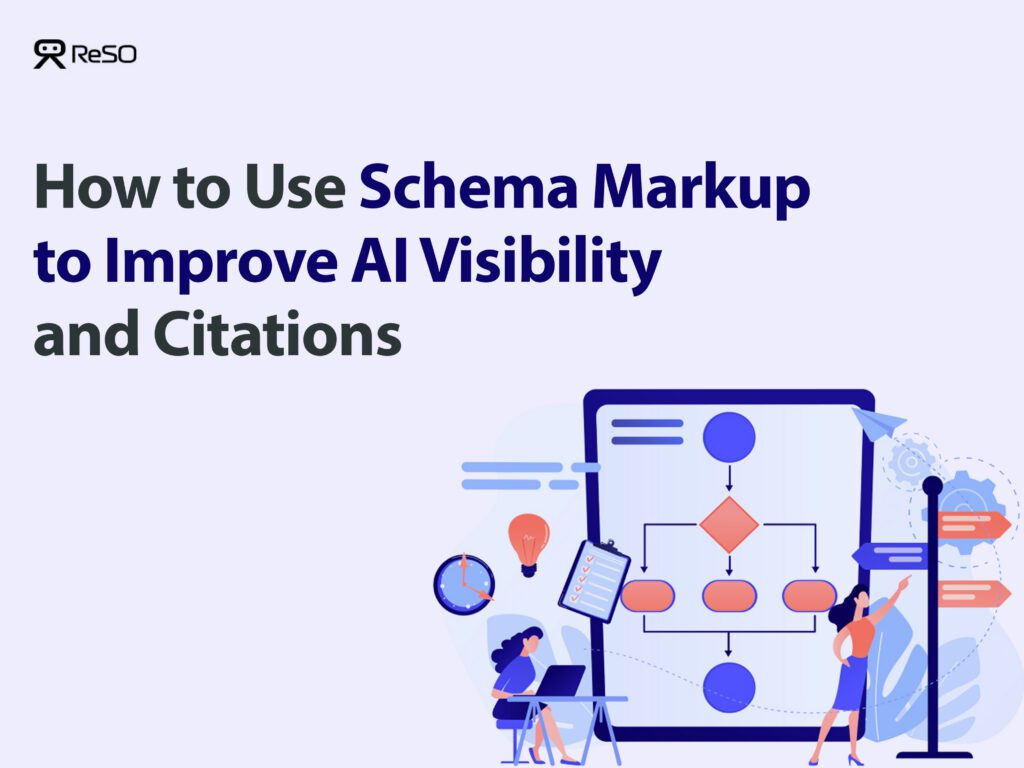
Google’s AI and other LLM-based search tools use structured data to understand your content better. Marking your FAQ sections and answers with schema gives AI a direct map of where to find the answers it needs.
What This Really Means for Your B2B AISO?
Traditional SEO focused on keywords and backlinks. Today, it’s about answering a spider web of questions with fresh, authoritative, user-centric content. AI search engines are shifting the focus away from ranking spots to being cited as the source of answers. This changes everything from content planning to the way you write and even to site architecture.
According to Google’s latest data on AI Mode, the average search session lasts over four minutes, which is twice the time of traditional searches. These longer sessions mean users want deeper, more satisfying answers. Google’s AI Mode can process complex, conversational queries and often breaks user questions into several sub-queries to fetch the best possible answer. So your content needs to be ready to answer not just the surface question, but related deeper queries as well.
And here’s the kicker: early reports show that users are submitting queries 2 to 3 times longer than before. That spells opportunity and challenge to create content that anticipates nuanced demands.
How To Apply This Into Your Content Strategy?
- Focus on long-form, question-driven content that layers answers. Start with the broad question, then drill down to specifics. This approach fits AI search’s multi-turn, follow-up question style.
- Creating modular, chunkable sections by dividing content into clear sections, each answering a core question, improves your chance of being sourced for AI responses. AI algorithms look for precise, bite-sized answers.
- Prioritize original, non-commodity content because Google’s AI Mode favors trustworthy and unique info. Rehashed, generic content is less likely to get cited.
- Engage in community platforms like Quora and Reddit, as they dominate AI citations, sometimes more than traditional top search results. B2B brands that participate in these communities organically multiply their AI visibility.
- AI search prefers content backed up with facts and clear results. Case studies, statistics, and actionable steps resonate better than vague promises or jargon.
Why Should B2B Marketers Care?
Gartner predicts that 80% of B2B sales interactions will occur in digital channels by 2025. Meanwhile, McKinsey forecasts that generative AI could deliver up to a $1 trillion productivity boost in sales and marketing combined (See paragraph 5). Those stats highlight how quickly AI-driven digital discovery will dominate B2B buyer journeys.
What this really means is that your content isn’t just competing with other websites anymore; it’s competing with AI’s ability to answer questions instantly. If you’re not geared for AI visibility, you could be missing out on your most qualified traffic.
Maybe that’s most crucial: standing still is a quick route to irrelevance. AI search will not wait for your brand to catch up. B2B marketers see this in buyer behavior already: average B2B sales cycles have shortened as more stakeholders trust instant AI research over laborious RFPs. The winners will be those prepared for high-velocity question-and-answer cycles, ready to inject expertise where curiosity spikes.
AI doesn’t reward perfection; it rewards progress, clarity, and direct value. Each incremental upgrade you make: sharper FAQs, better chunking, higher editorial standards, puts your content in the running for tomorrow’s answers. Each neglected update increases the odds that you’ll be invisible in the next critical search.
This is the new playbook: Show up with clear, question-driven content. Structure every resource with answerability in mind. Update, monitor, and participate where the conversation is most relevant and visible. AI will reward the brands willing to teach, serve, and make complexity simple for every real question that matters.
That’s how you become unmissable in a landscape where the best answers, not just the best rankings, win.
ReSO specializes in such AISO tactics that help your B2B brand soar on AI search results. If that’s what you’re looking for to grow in the AI age, we’re one click away. Book your 1:1 call with us. Let’s connect and map out how AI & proven strategies can accelerate your revenue.
Frequently Asked Questions
1. What role do community platforms like Reddit and Quora play in AI citations?
Community platforms like Reddit and Quora play a major role in AI citations because they contain independent, peer-driven discussions that reflect real experiences. AI systems use these platforms to validate sentiment, compare opinions, and confirm practical use cases, making them trusted sources for grounding and supporting AI-generated answers.
2. How do AI search engines decide which brands to cite in their answers?
AI search engines decide which brands to cite based on answer quality, not rankings. They evaluate how clearly a brand explains a topic, how well the content matches conversational intent, and whether it provides structured, factual, and trustworthy information. Brands that consistently answer real user questions with clarity, evidence, and proper structure are more likely to be selected and cited.
3. Why is question-driven content more effective than keyword-focused SEO?
Question-driven content is more effective in AI search because AI systems are designed to answer questions, not match keywords. Instead of scanning for exact phrases, AI engines interpret intent and look for content that directly resolves a user’s problem. Pages structured around real questions provide clearer, extractable answers, making them easier for AI to select and cite.
4. What types of questions are most likely to appear in AI-generated search results?
Questions most likely to appear in AI-generated search results are those that reflect real decision-making and problem-solving.
These include “how-to” questions, comparisons, best-fit evaluations, troubleshooting queries, and explanatory questions that seek clarity or guidance. AI systems prioritize questions that require context, nuance, or synthesis rather than simple fact lookups.
5. How does AI break a single search query into multiple follow-up questions?
AI breaks a single search query into multiple follow-up questions by expanding it into related sub-queries that reflect intent, context, and possible user needs. It analyzes the wording, background signals, and common patterns from similar searches, then retrieves information across those variations to assemble a complete, conversational answer.