You check your Monday morning analytics dashboard. Organic traffic is down 15% month-over-month. Yet conversions? They’re up 23%. Your executive team asks why the numbers don’t align, and you’re struggling to explain a fundamental shift that’s redefining the future scope of search engine marketing: AI has transformed search from a referral system into an answer engine.
According to comprehensive research analyzing search behavior through 2025, nearly 60% of all searches now end without a single click to any website. More dramatically, around 75% of AI search sessions end without a website visit.
This is the new baseline. Understanding the future of search with AI requires abandoning traditional metrics and embracing visibility-first strategies where being cited matters more than being clicked.
Key Takeaways:
- Search success in 2026 is defined by visibility, not traffic. Falling clicks alongside rising conversions often mean your brand is being surfaced inside AI answers, influencing decisions even when users never visit your site.
- AI favors brands it can understand and trust consistently. Structured content, clear messaging, schema, and aligned information across owned and external platforms create the authority signals models rely on.
- The goal of optimization has shifted from ranking pages to earning citations. Content designed for extraction, clear answers, logical structure, and real expertise can achieve AI visibility much faster than traditional rankings.
- Measurement needs a new lens. Citation frequency, share of voice in AI responses, branded search lift, and downstream conversions reveal whether your brand is winning the visibility layer.
- The strongest strategy is layered, not replaced. Traditional SEO foundations, answer-ready content, social and community presence, and emerging AI discovery surfaces work together to build durable visibility across the new search ecosystem.
The Great Expansion: Search Is Everywhere Now
Traditional definitions of search marketing, focusing exclusively on organic SEO and paid Google Ads, are obsolete. The future of search marketing encompasses AI-driven answer engines, zero-click results, social platforms functioning as search engines, and voice interfaces that deliver answers without websites.
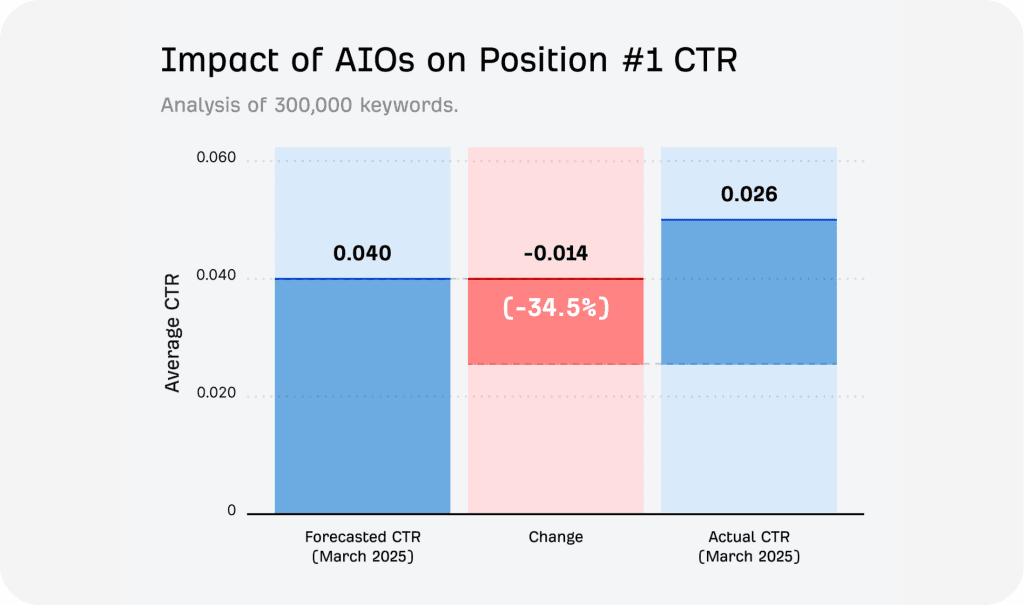
Millions use ChatGPT weekly for recommendations (WordStream 2026), be in those answers or stay invisible. Meanwhile, AI-powered search features have reduced organic traffic by 18-30% across categories, with individual websites experiencing average CTR drops of 34.5% when AI Overviews appear for their target keywords.
The critical insight that separates winning brands from those losing ground: roughly half of search interactions now happen outside traditional search engines entirely. TikTok, Reddit, LinkedIn, and ChatGPT serve as primary discovery surfaces where users find brands without ever touching Google. The future scope of search engine optimization now extends across platforms that don’t even look like search engines.
How AI Provides Insights Into Search Behavior
AI models decide which brands to mention based on signals traditional SEO barely captures. According to an analysis, 86% of AI citations came from brand-controlled content (websites and listings) rather than forums, cutting through confusion about the role of platforms like Reddit and providing marketers with actionable data.
This reveals that AI doesn’t just reward good content; it rewards omnipresent authority built through consistent, structured information across the entire web.
Research from Gartner’s prediction of a 25% drop in traditional search volume by 2026. Their analysis indicates that for “discovery search terms”: informational queries used by B2B buyers during research phases, the decline has far exceeded forecasts. The aggressive deployment of Google’s AI Overviews now intercepts up to 68% of clicks on informational queries, while complex B2B buyer research migrates to Large Language Models like ChatGPT, Claude, and Perplexity.
Zero-click searches are projected to hit 70% by 2026 (industry consensus) as AI Overviews expand across queries. The current 60% baseline, combined with AI Overview expansion, makes this trajectory inevitable.
How Will AI Change SEO: From Rankings to Citations
| Aspect | Traditional SEO | Answer Engine Optimization (AEO) |
| Primary Goal | Rank higher in 10 blue links | Get cited directly in AI answers |
| Success Metric | Position #1-3 | Brand mention in ChatGPT/Perplexity |
| Content Focus | Keyword density + backlinks | Comprehension + trustworthiness |
| Structure Priority | H1-H3 + internal links | Clear headings, logical sections |
| Traffic Model | Clicks from SERPs | Zero-click impressions (60%+ searches) |
| Optimization Target | Google algorithm | ChatGPT + Perplexity citation logic |
| Timeline | 6-12 months ranking | Weeks for AI visibility |
New Metrics for the AI Search
| Metric | Definition | Why It Drives Revenue |
| Citation Frequency | How often AI mentions your brand for category queries | Impressions > clicks as primary success signal |
| AI Referral Traffic | Visitors from ChatGPT/Perplexity (track separately) | Higher conversion than organic despite lower volume |
| Branded Search Lift | Direct searches after AI exposure (not in standard attribution) | Downstream value from “being seen in AI answers” |
| Share of Voice | Your brand mentions vs competitors in AI responses | Reveals if you’re winning/losing the visibility war |
| Zero-Click Visibility | Appearing in AI summaries without clicks | ALM Corp: 2026 success = being IN answers, not ranked below |
The Multi-Surface Strategy Framework
The winning approach combines several layers:
Maintain Traditional SEO Foundation:
Google’s dominance continues despite challenges. Technical fundamentals like schema markup, mobile UX, site speed, and H-E-E-A-T signals (Helpfulness, Experience, Expertise, Authoritativeness, Trustworthiness) remain essential.
Optimize for Answer Engines:
Structure content so AI can extract, understand, and cite it confidently. This includes:
- Implementing FAQ schema
- Creating extractable one-sentence takeaways
- Using clear headers that answer specific questions
- Adding structured data that machines can parse easily.
Leverage Social Search:
Particularly for younger users, discovery increasingly happens on TikTok, Instagram, and LinkedIn rather than Google. Brands must optimize for discovery across platforms, not just traditional search engines.
The days of optimizing only for Google are over because search happens everywhere.
Prepare for Paid AI Search:
While fully developed paid AI search doesn’t exist at scale yet, infrastructure is being built. ChatGPT’s partnerships with Booking.com and Spotify prove brands can integrate directly into AI platforms, creating new paid search opportunities.
What Success Looks Like in Zero-Click
- Content is easy for AI systems to interpret and reuse if it appears frequently in generated answers.
- Visibility increases even when traffic does not; their content wins because it’s designed for extraction, not just reading.
This represents the strategic pivot required: shifting from traffic-first to visibility-first thinking. A drop in clicks doesn’t always mean a drop in reach. In many cases, your expertise is being surfaced more often, just in different formats that traditional analytics can’t capture.
For small and medium-sized businesses, the playing field is different but not disadvantageous. The businesses that thrive in 2026 make themselves easy for AI to understand. They publish information that is structured, credible, and rooted in real experience. They track impressions, citations, and branded search lift across AI platforms, not just website traffic.
Common Mistakes to Avoid
- Abandoning Traditional SEO:
- The foundation still matters.
- You can’t skip traditional optimization and jump straight to AI tactics.
- Obsessing Over Vanity Metrics:
- Rankings and clicks tell incomplete stories.
- Focus on engagement, conversions, and business outcomes instead.
- Not Adapting Measurement:
- Using 2022 KPIs for 2026 search leads to misreading performance.
- Update dashboards, educate stakeholders, and redefine success metrics.
- Siloing Strategies:
- SEO, SEM, AEO, and social search should work together, not in isolation.
- Break down team silos and create integrated strategies.
- Forgetting Human Expertise:
- AI-generated content without genuine expertise won’t win in traditional OR AI search.
- Both reward authentic expertise and original insights.
The brands embracing this “visibility-first” reality create compounding advantages as AI models learn to trust them over competitors still obsessed with Google Analytics sessions. In the zero-click year, being the answer beats being the link every time.
Found what you read useful? Subscribe to our newsletter here.