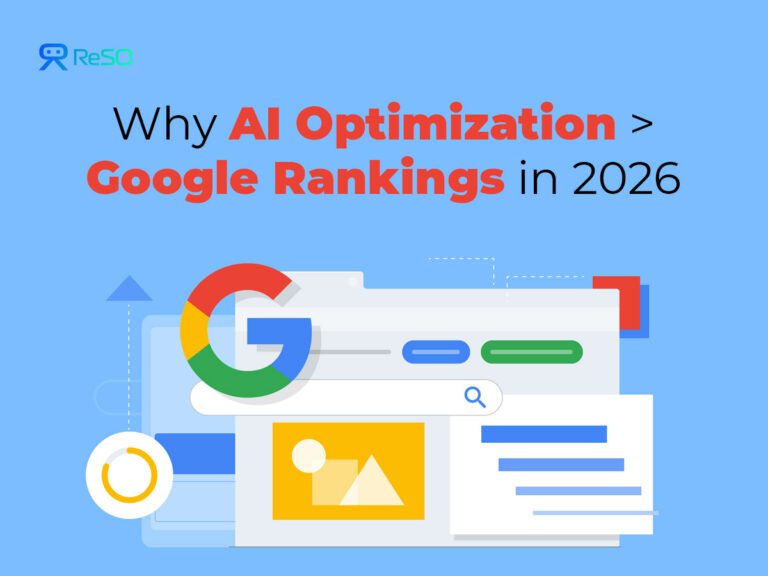
Your page ranks number one. Your traffic is down 30%. Your competitor ranks number seven. Their revenue is up 40%. It is 2026, where Google rankings and business success have officially decoupled, and most marketers are still optimizing for the wrong game.
The shift isn’t subtle. It’s seismic. And the data reveals exactly why AI search optimization now matters more than traditional rankings ever did.
Key Takeaways:
- Rankings ≠ traffic anymore. Ahrefs’ “crocodile mouth” shows impressions up, clicks down 30% as AI Overviews create 2x visibility without engagement.
- AI traffic converts massively. 4.4x higher value than organic; Ahrefs: 0.5% AI visitors drove 12.1% signups (23x efficiency). 1.34% subscription rate vs 0.55% search.
- YouTube + Google own 58% citations. YouTube gets 200x more than Vimeo/TikTok, dominates Google AI Overviews (29.5%), and instructional content up 35.6%.
- 84% of brands track nothing. Only 16% monitor AI metrics (citation frequency, share of voice) while competitors compound data advantages.
- Buyer journeys start in ChatGPT. Target “best CRM mid-market” prompts for top-3 positioning, AI sets the consideration set before Google.
- 76% AI citations from top-10 pages, so maintain technical SEO + schema, but shift budget to citations (higher ROI than rank gains).
The Great Decoupling: When Visibility and Traffic Split Apart
For two decades, SEO operated on a fundamental truth: higher rankings meant more traffic. That correlation has collapsed. Recent analysis from BrandLight examining millions of AI citations reveals the stark reality: citations versus visits show virtually no correlation, with a correlation coefficient of just 0.02.
A correlation of 0.02 means traditional traffic metrics tell you almost nothing about your AI visibility. One domain with only 8,500 visits appeared in 23,787 AI citations, while another with 15 billion visits was cited significantly less. The relationship between popularity and AI trust doesn’t just weaken; it essentially disappears.
Ahrefs documented this phenomenon, tracking their own analytics through 2025, watching impressions and clicks, metrics that moved together for years, suddenly diverged into what they termed “the crocodile mouth.” Impressions climbed while clicks plummeted, creating a widening gap that appeared across hundreds of client accounts simultaneously.
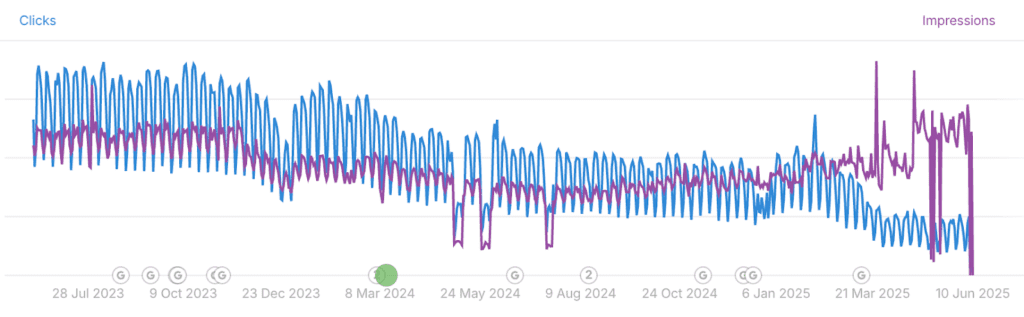
SOURCE: Ahrefs
The cause is clear: AI Overviews now generate two impressions per query. Once as a traditional link and again as a citation, inflating visibility without increasing engagement. Users read AI-generated summaries, get their answers, and never click through. You’re visible. You’re cited. You’re influential.
However, Google Analytics shows declining traffic, and traditional marketers panic while their competitors who understand AI optimization capture market share.
Why AI Traffic Converts Differently
| Metric | AI Visitors | Organic/Social | Implication |
| Value Multiple | 4.4x higher | Baseline | Pre-qualified intent |
| Ahrefs Signups | 12.1% (0.5% traffic) | – | 23x conversion efficiency |
| Subscription Rate | 1.34% | 0.55% search, 0.37% social | Ready-to-act users |
| Visibility Impact | 1 citation = 10K impressions | Position 3 = 5K bounces | Prioritize citations over volume |
YouTube and Google Claim 58% of All AI Citations
- YouTube gets 200x more citations than Vimeo/TikTok (0.1% each); Dailymotion/Twitch = 0%.
- Surpasses Mayo Clinic (12.5%); 20% share across all platforms.
- YouTube + Google.com control the majority of AI citations.
- Instructional (+35.6%), demos (+32.5%); ChatGPT +100% WoW.
- Non-Google platforms (Perplexity 9.7%) still prioritize YouTube, video battle won here.
Only 16% of Brands Track AI Performance Metrics
| Reality | Traditional SEO | AI Search | Strategic Impact |
| Adoption Rate | Universal tracking | 16% systematic | 84% operate blind |
| Key Metrics | Rankings, traffic, CTR | Citation frequency, share of voice, and AI conversions | Visibility > volume |
| Tools Needed | GSC, GA4 | ReSO, Semrush | New infrastructure required |
| Competitive Edge | Level playing field | Early adopters gain a compounding data advantage | See the gaps competitors miss |
The Buyer Journey Starts in ChatGPT Now
AI citations now kick off B2B buyer journeys, outvaluing traditional rankings for discovery.
1. Target AI Discovery Queries
Map buyer questions like “best CRM for mid-market” to ChatGPT-style prompts.
2. Secure Initial Mentions
- Aim for the top 3 in AI responses.
- These become the consideration set.
3. Craft Contextual Positioning
Build content addressing the implementation concerns AI assistants raise.
4. Measure Citation Influence
Track share of voice in vendor discovery moments vs. organic rankings.
5. Prioritize Pre-Qualified Traffic
Optimize for AI referrals (higher conversions) over broad search volume.
The Dual-Track Strategy: Both Matter, But Priorities Shift
AI optimization yields higher ROI than traditional SEO gains, shifting resources to citations while upholding core foundations. Position improvements yield modest clicks: #2 to #1 boosts 74.5%, one rank up averages 32.3% CTR increase.
Sustain technical SEO and backlinks:
- 76% of AI citations stem from top-10 pages
- Add structured data, FAQ schema
- YouTube/Reddit presence for visibility
Track AI-specific metrics like citation share and referral conversions, valuing influence over volume for 2026 dominance.
What This Means for Your 2026 Strategy
AI optimization delivers disproportionate value compared to traditional rankings for influence, discovery, and qualified traffic generation.
- Citations correlate 0.02 with traffic, but drive visitors worth 4.4x more.
- YouTube and Google claim 58% of citations, creating concentrated optimization targets.
- Only 16% of brands track performance, leaving massive blind spots.
- Buyer journeys increasingly start in AI assistants rather than traditional search.
These are measurements of the present that most marketers haven’t adjusted to yet. Therefore, now the question is whether you’ll do it while your competitors are still blind, or whether you’ll wait until AI citations become as competitive and difficult as traditional rankings already are.
The brands that are establishing AI citation dominance are now:
- Implementing measurement infrastructure
- Building systematic optimization processes
- Tracking competitive share of voice is creating advantages that will compound in the future.
The great decoupling of rankings and traffic isn’t a problem to solve; it’s a reality to exploit. While competitors chase traditional rankings that deliver diminishing returns, optimize for AI citations that deliver compounding value.
That’s not just a smart strategy for 2026. It’s the only strategy that aligns with where visibility, influence, and business value actually live in an AI-first search landscape.
And, if you want to make sure that your B2B brand shows up on AI-powered answers, book a call with ReSo.